Reputation Management
Effortlessly and accurately track the web and social network impact of your brand

Why Visibrain
Our Coverage
The best coverage across the web and social networks
Our Technology
Our intuitive interface uses cutting-edge technology
Our Support
Our team is with you every step of the way
Featured
5 Easy Steps to choose the Right Social Listening Tool

Learn more
Our clients
Brands
Visibrain for brands
Institutions & Local Authorities
Visibrain for institutions and local authorities
Agencies
Visibrain for agencies
Success Stories
Discover how our clients use Visibrain
Client stories
How LVMH is using LinkedIn monitoring to boost its influence with Visibrain

Read the case study
Resources
Blog
Stay up to date
White Papers
Studies, industry analysis and advanced insights
Case studies
Our client stories
Help center
Guides and resources for users
Newsletter
Stay up to date with the latest Visibrain news!
Webinars
Our upcoming webinars.
Our Last Study
PR Crises in the AI Era

Download the full guide
The data shows a classic crisis spike pattern. Over the past 24 hours, we recorded:
179,101 posts
48,713 unique users
6,529,315 interactions (likes, comments, shares)
984,423,613 impressions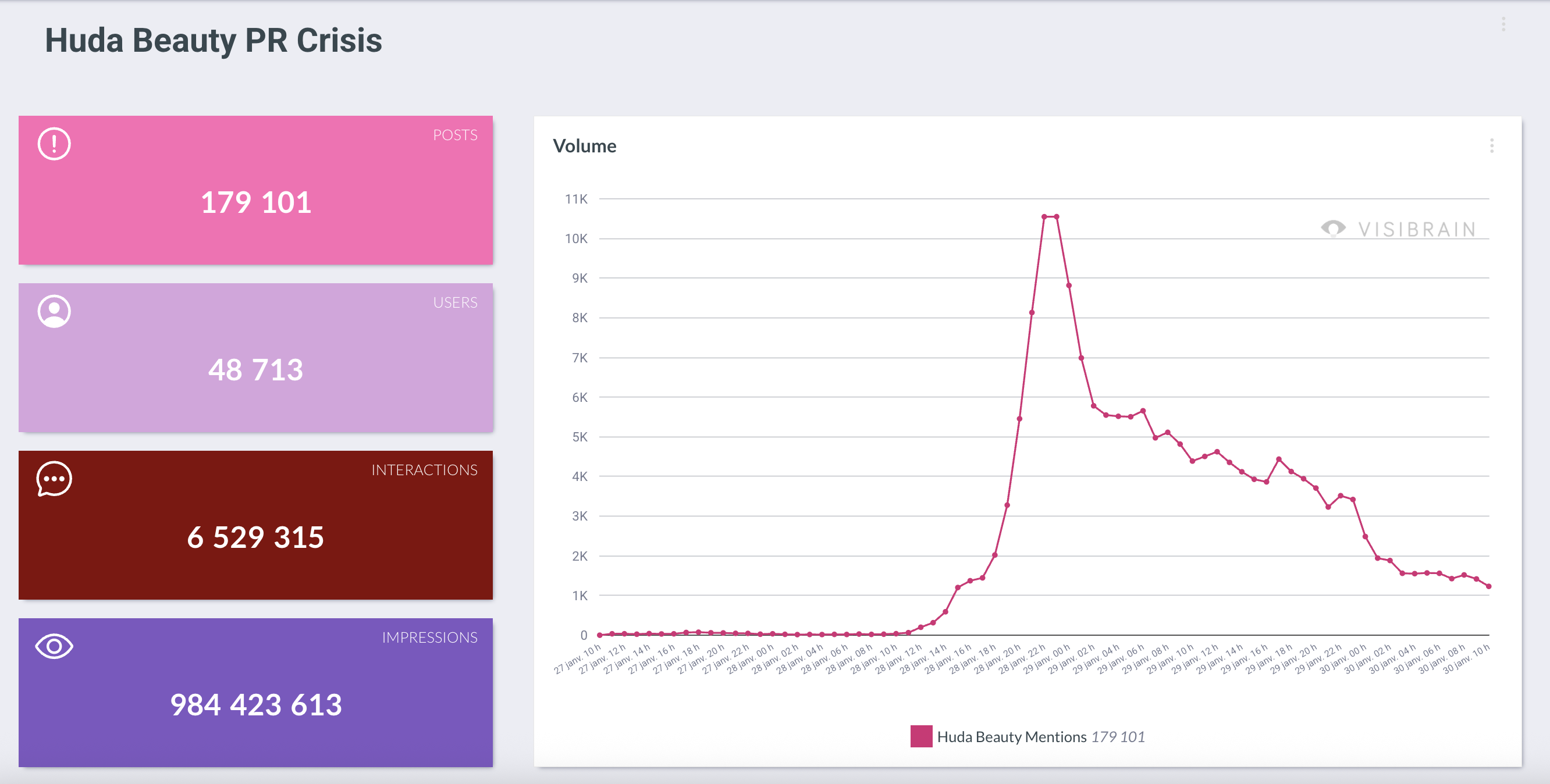
Conversation volume began surging dramatically on 29 January, when mentions peaked at over 10,000 posts per hour at the height of the backlash. This sharp rise usually suggests a triggering moment likely a viral post, influencer amplification, or coordinated activism pushing a crisis into mainstream visibility.
Following the peak, conversation gradually declined but remained elevated, indicating that the issue moved from a flashpoint to an ongoing reputational discussion rather than disappearing immediately.
For brands, this pattern highlights a critical reality: you often have only a small window between early warning signs and full-scale virality.

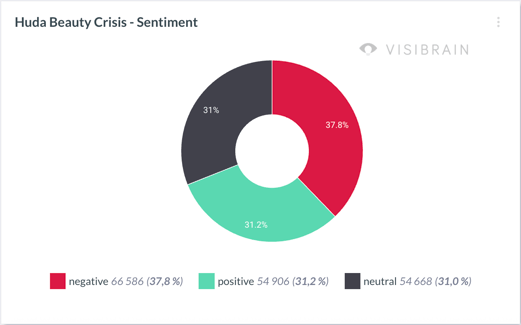
Sentiment data confirms the reputational strain. Negative sentiment represents the largest share of the conversation, a very strong indicator of reputational stress. In most brand conversations, negative sentiment typically remains in the low double digits. Crossing into the high 30% range signals that criticism is not just present, but structurally shaping the narrative.
This is where social listening becomes a strategic early-warning system. Social monitoring tools allow brands to:
Set automated alerts when negative sentiment exceeds a defined threshold
Detect sudden shifts in tone before volume peaks
Identify which audiences or communities are driving criticism
Instead of reacting once a crisis is trending globally, brands can intervene earlier, before the issue has fully escalated.
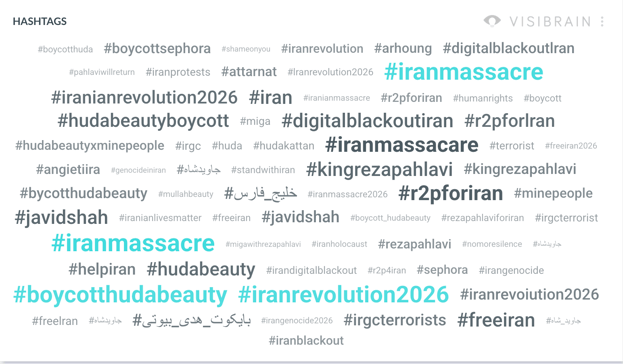
Hashtag analysis reveals that this is not a generic beauty-industry controversy and has become tied to geopolitical and activist narratives.
The most visible hashtags include #iranmassacre, #iranrevolution2026 and #boycotthudabeauty. These hashtags show that the conversation quickly moved beyond product or brand concerns and into politically charged discourse. Once a brand becomes embedded in a broader socio-political narrative, the dynamics change and brands can quickly lose control of the conversation.
This is the point when activist communities join the discussion and boycott messaging starts to be coordinated. Emotional intensity increases and it becomes more than regular online backlash.
When a controversy gains traction across multiple platforms, it signals a clear escalation. But cross-platform analysis reveals far more than just scale. During a crisis, each social network plays a distinct role in how backlash spreads, amplifies, and evolves. The differences become particularly visible in the examples below:
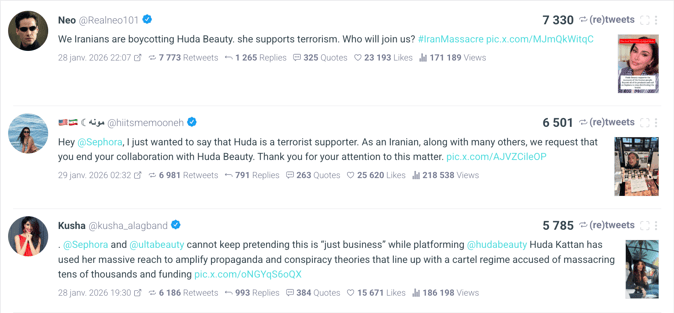
On X, we see that conversations focus around calling out businesses associated with the brand as well as calling for boycott:
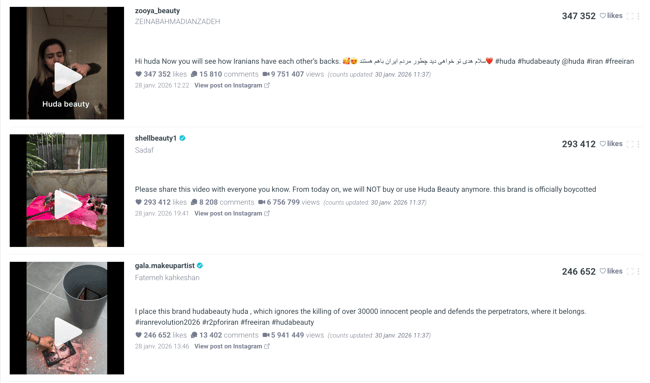
Instagram is more demonstrative in it's content, with many videos featuring users destroying their Huda Beauty products:
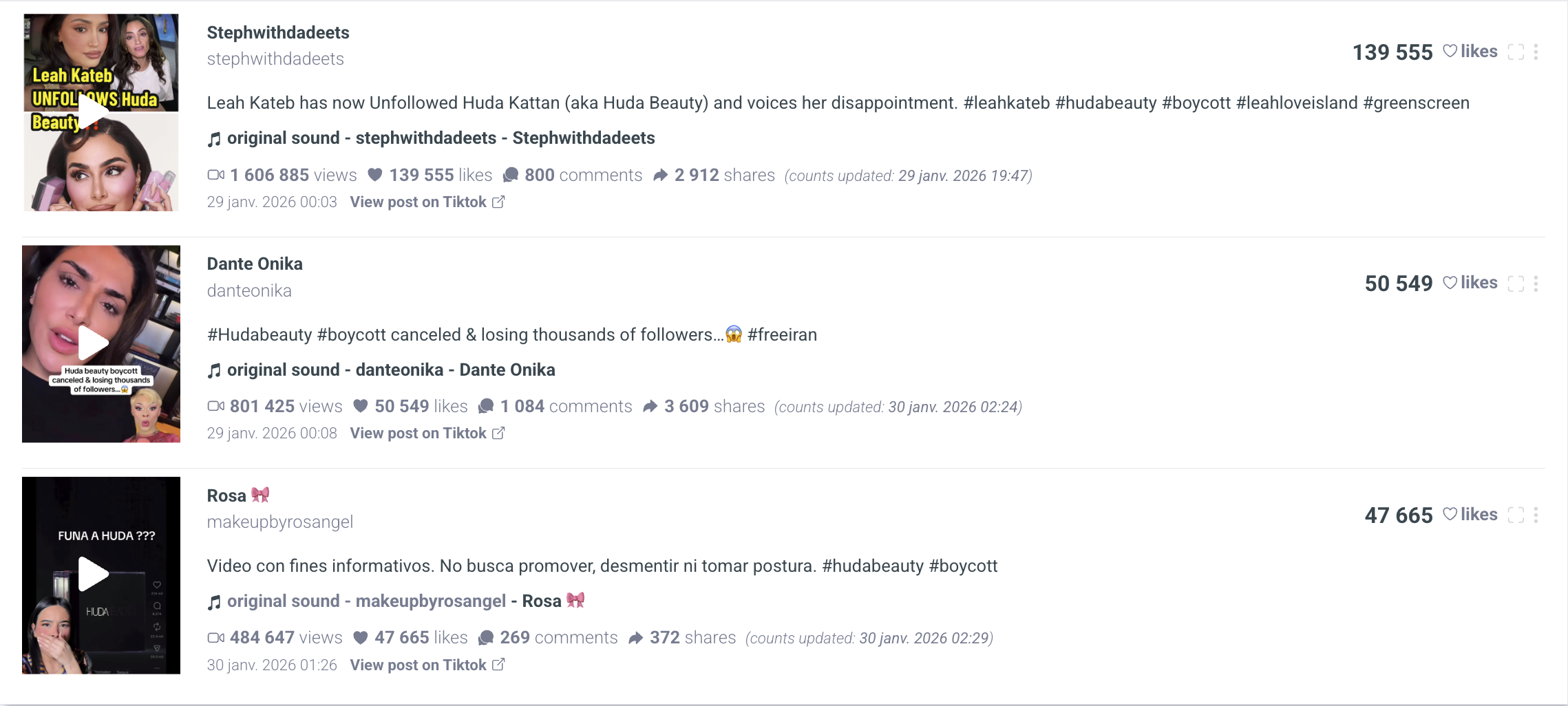
Much of TikTok's top content focuses on educating users on the topic and giving step-by-step breakdowns on how the backlash started:
Analysis of the most influential Instagram accounts shows that the conversation was shaped by a mix of beauty creators, activists, and journalists, illustrating how the crisis moved beyond the cosmetics community into wider social and political discourse. When media voices and advocacy accounts begin engaging alongside industry influencers, it often signals that a brand issue has crossed into mainstream debate.
Language data further highlights the global dimension of the backlash. While English dominated (76%), a notable share of posts appeared in French (7%), German (4%), Spanish (3%), and Italian (2%), with additional discussion across other languages. This multilingual spread demonstrates how quickly a controversy can transcend regional audiences, reinforcing the need for brands to monitor conversations internationally.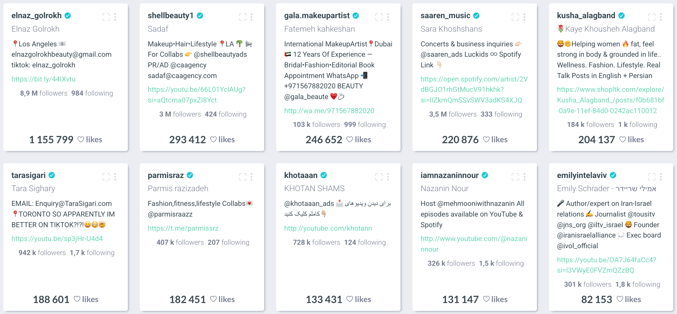
The Huda Beauty crisis illustrates how founder-driven brands are especially vulnerable when personal expression intersects with global political sensitivities.Social listening does not just measure noise, it provides the context, timing, and narrative intelligence brands need to respond proportionately and strategically.
For more on how to manage reputational risk effectively, we spoke to crisis communication specialist Irene Proto, who advises brands across Europe on how to navigate PR crises in the digital age. You can read the full interview here for insights on what to say, when to act, and how to rebuild trust when things go wrong.
Newsletter
.png?width=1090&height=1330&name=CTA%20newsletter%20(1).png)