Reputation Management
Effortlessly and accurately track the web and social network impact of your brand

Why Visibrain
Our Coverage
The best coverage across the web and social networks
Our Technology
Our intuitive interface uses cutting-edge technology
Our Support
Our team is with you every step of the way
Featured
5 Easy Steps to choose the Right Social Listening Tool

Learn more
Our clients
Brands
Visibrain for brands
Institutions & Local Authorities
Visibrain for institutions and local authorities
Agencies
Visibrain for agencies
Success Stories
Discover how our clients use Visibrain
Client stories
How LVMH is using LinkedIn monitoring to boost its influence with Visibrain

Read the case study
Resources
Blog
Stay up to date
White Papers
Studies, industry analysis and advanced insights
Case studies
Our client stories
Help center
Guides and resources for users
Newsletter
Stay up to date with the latest Visibrain news!
Webinars
Our upcoming webinars.
Our Last Study
PR Crises in the AI Era

Download the full guide
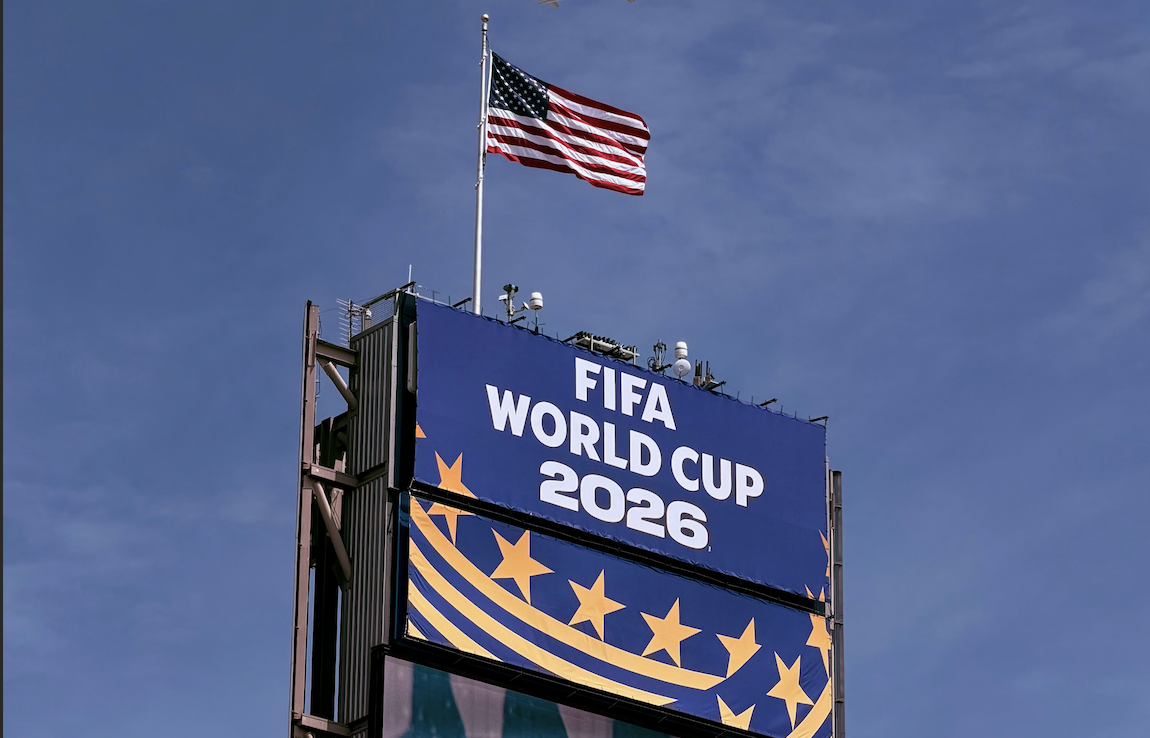
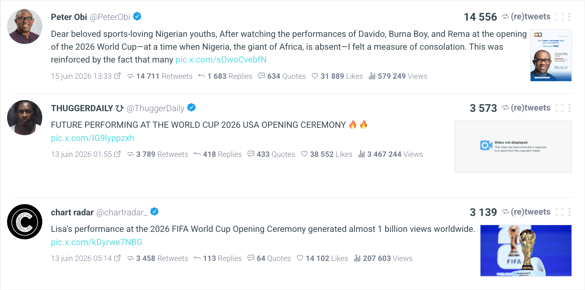
Before a ball was even kicked, the World Cup's opening ceremony had already become one of the tournament's biggest social media moments.
The ceremony generated more than 485,000 tweets, accounting for nearly 5% of the 10 million World Cup-related tweets published so far. Much of the conversation centred around the musical performances, with artists such as Davido, Future and Lisa generating significant engagement across social platforms.
The performances quickly became a focal point of online discussion, with fans sharing clips, reactions and commentary throughout the event.

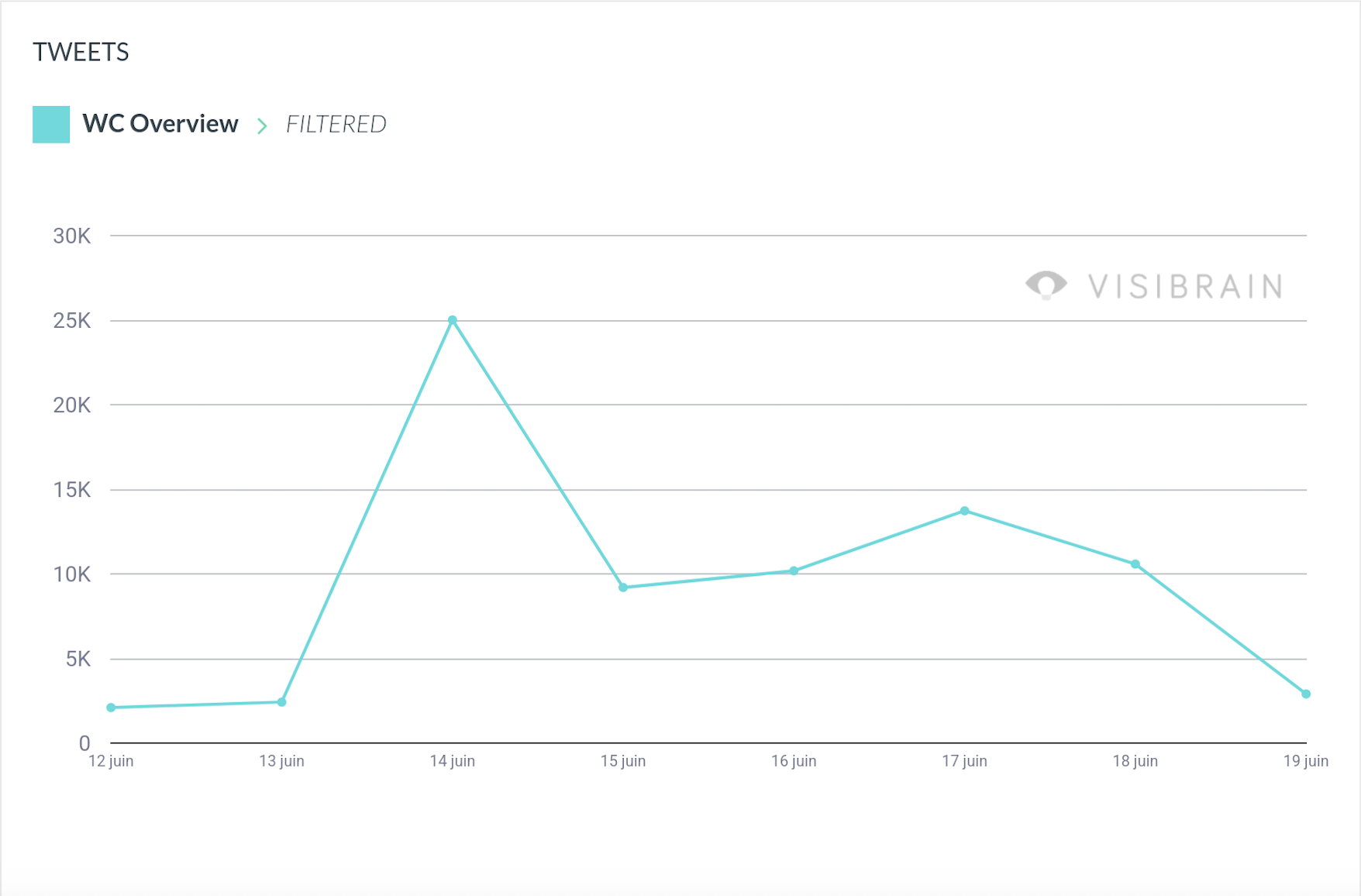
While many matches have generated discussion online, Germany's emphatic 7-1 victory over Curaçao produced one of the clearest spikes in conversation so far.
On the day of the match, World Cup-related discussion surged by more than 25,000 tweets, as fans reacted to one of the tournament's most dominant performances.
The scoreline quickly fuelled debates about Germany's credentials as title contenders, while social media users shared highlights, reactions and memes following the result.
Not every viral World Cup moment has happened on the pitch.
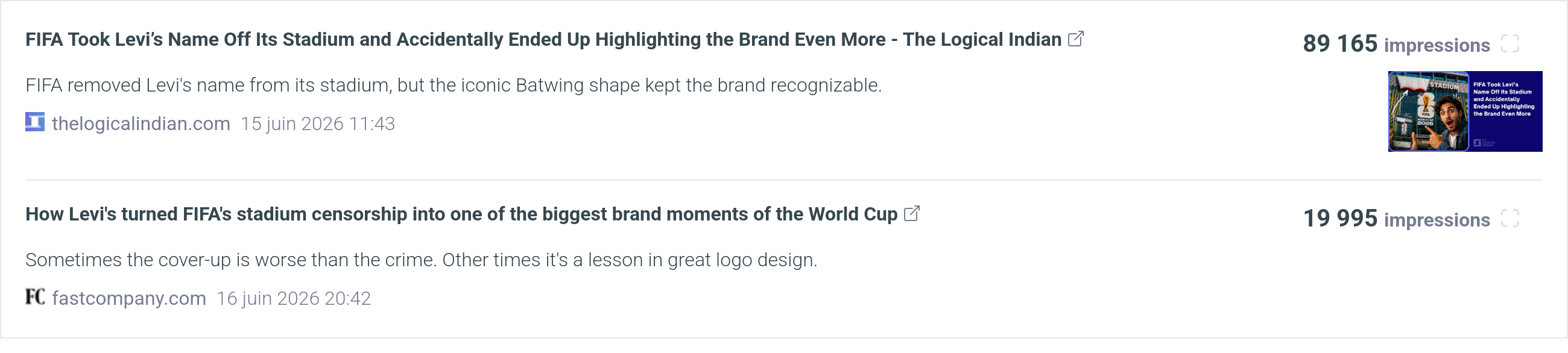
When FIFA's branding regulations prevented Levi's Stadium from displaying its full name during the tournament, the brand found a creative workaround that quickly attracted attention online.
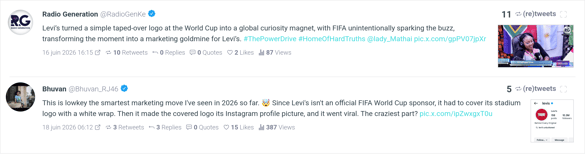
Rather than focusing on the stadium name itself, Levi's leaned into its iconic visual identity, generating widespread discussion among marketers, journalists and football fans. The move was widely praised as an example of clever event marketing and demonstrated how brands can remain visible even within strict sponsorship frameworks.
The resulting conversation spread well beyond football audiences, reaching marketing and branding communities across multiple platforms
Not all World Cup conversations have been positive.
One of the most persistent criticisms of the tournament so far has centred on ticket pricing, particularly following images of empty seats at several matches.
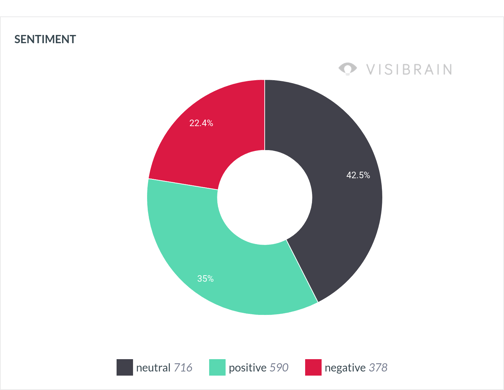
Analysis of the conversation reveals that 22.4% of mentions related to ticket prices were negative, highlighting growing frustration among supporters who argued that pricing was limiting accessibility for fans.
The debate quickly expanded beyond football, prompting wider discussions about affordability, attendance and the balance between commercial success and fan experience.
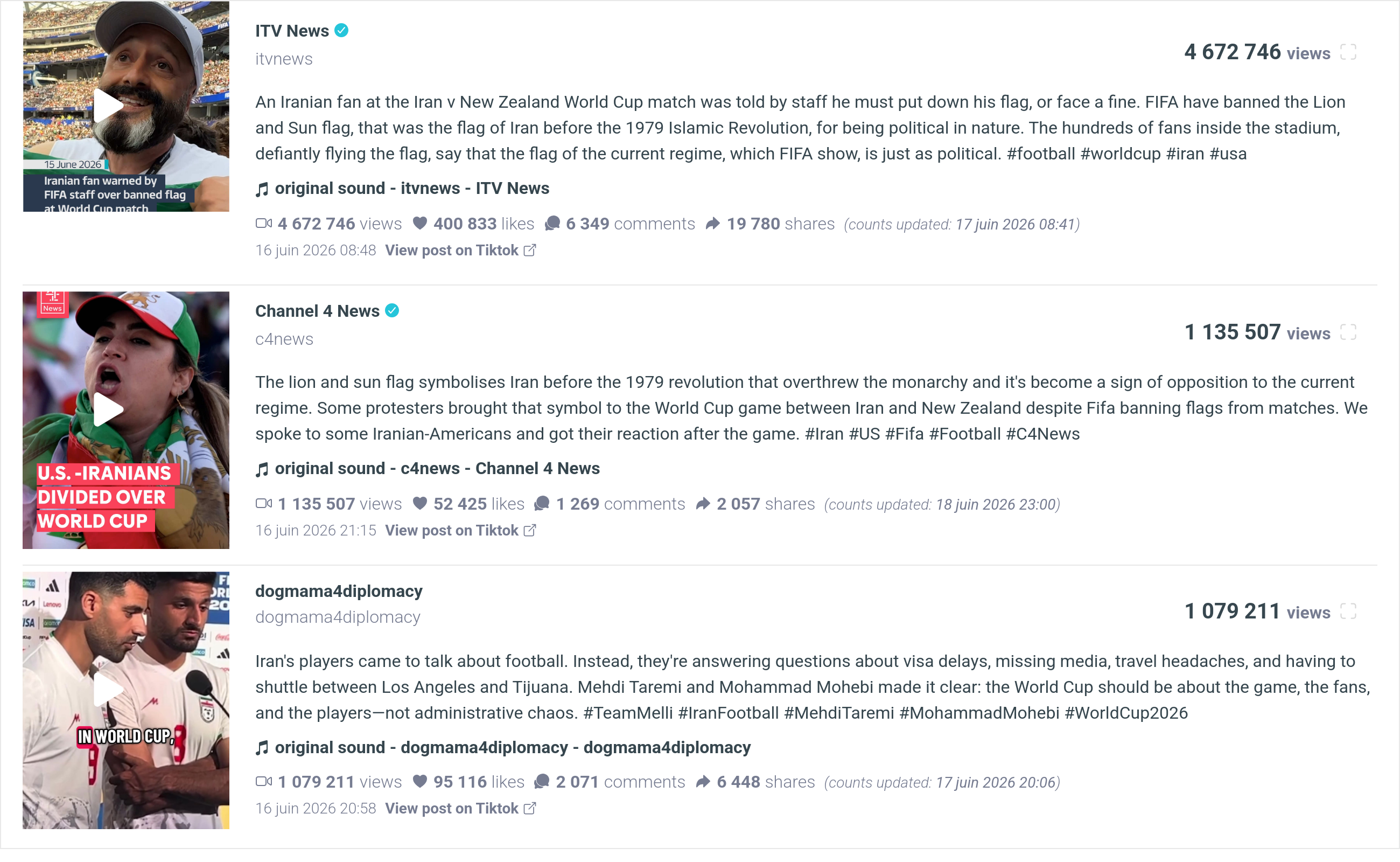
One of the tournament's most politically charged discussions has focused on FIFA's decision to ban the use of the historic Iranian Lion and Sun flag inside stadiums.
The issue quickly spread across social media, particularly on TikTok, where videos discussing the controversy accumulated more than 36 million views.
News organisations, creators and football commentators all contributed to the discussion, transforming what began as a stadium policy issue into a global online debate about identity, representation and freedom of expression.
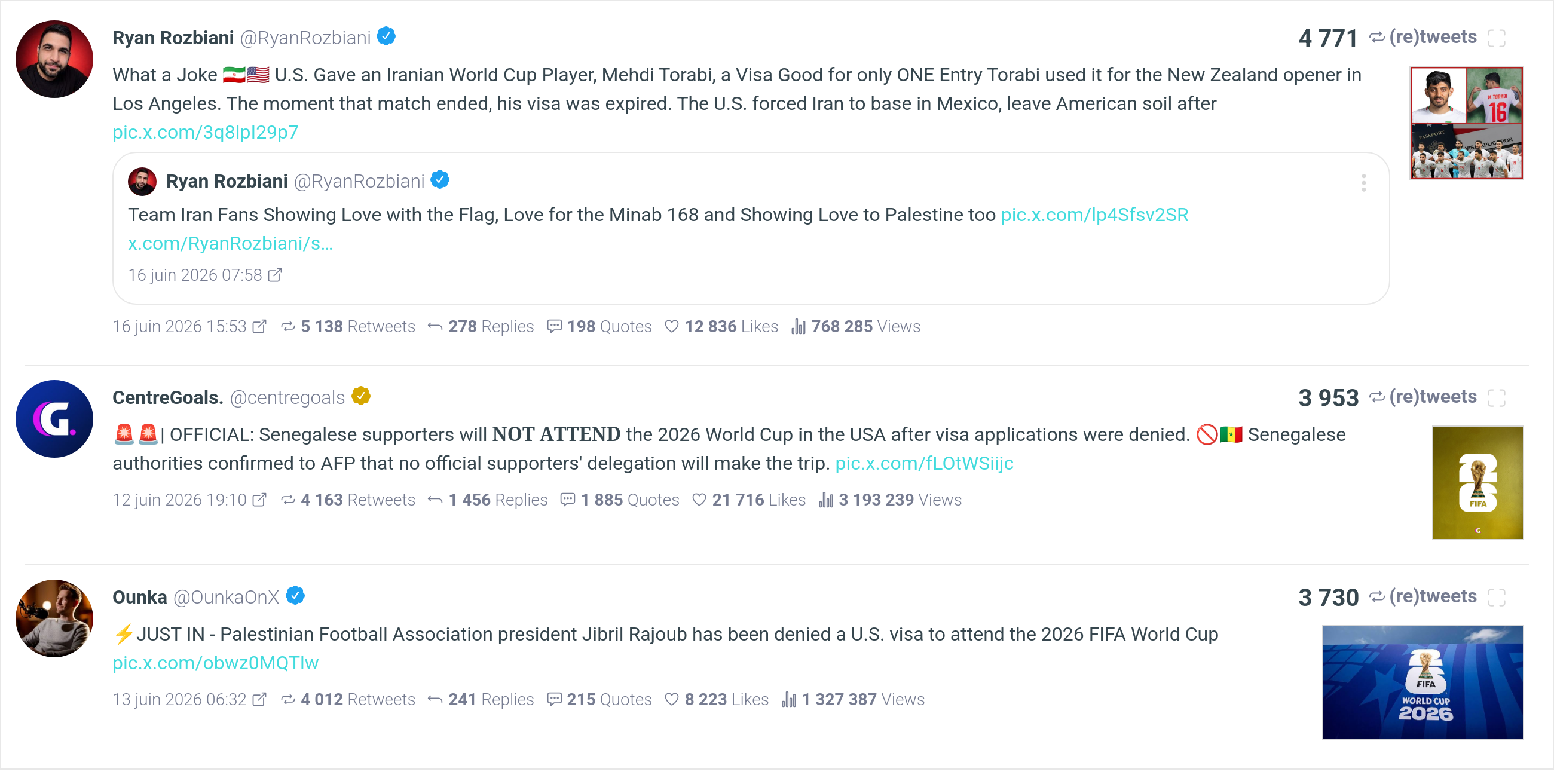
Visa and border-related concerns have emerged as another major source of discussion during the tournament.
Conversations highlighted a range of issues, including reports involving Iranian player Mehdi Torabi, the President of the Palestinian Football Association Jibril Rajoub, and challenges faced by Senegalese supporters attempting to attend matches.
According to Visibrain data, 54% of conversation surrounding these issues was negative, making it one of the most critical topics discussed online so far.
The story demonstrates how major sporting events increasingly become platforms for wider discussions about international mobility, inclusion and access.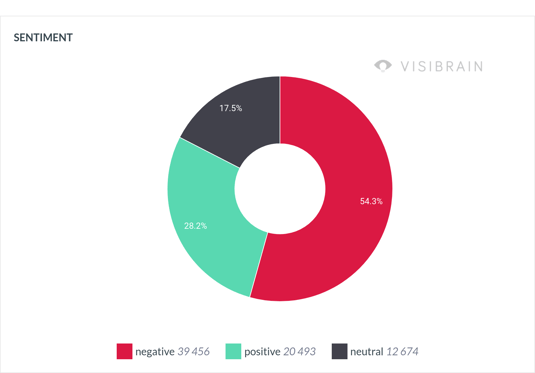
Every World Cup produces an underdog story, and Cape Verde has quickly become one of this year's fan favourites. The nation's performances have generated a wave of positive engagement online, with goalkeeper Vozinha emerging as one of the tournament's breakout stars.
Instagram was particularly active, with supporters, football pages and media outlets celebrating Cape Verde's achievements and sharing clips of key saves and match highlights.
Beyond the results themselves, the story reflects social media's ability to amplify compelling narratives and turn unexpected teams into global talking points.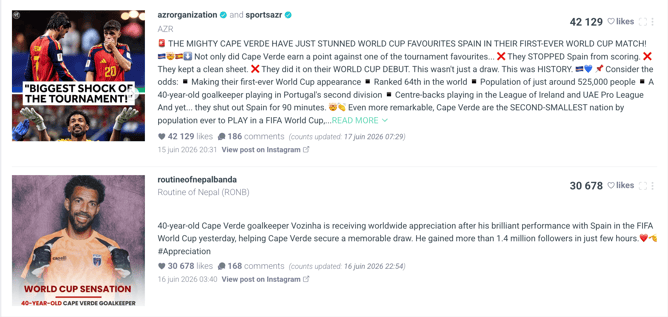
The biggest conversations of the World Cup so far have not been limited to goals and results.
While standout performances such as Germany's victory over Curaçao and Cape Verde's rise have captured the imagination of fans, some of the tournament's most significant online moments have emerged from broader cultural, political and commercial debates. From ticket pricing and visa issues to brand marketing and national identity, the World Cup continues to generate discussions that extend far beyond the pitch.
For brands, organisations and communications teams, these moments highlight why social listening remains essential during major global events. The stories driving online conversation are often the ones no one predicted.
Newsletter
.png?width=1090&height=1330&name=CTA%20newsletter%20(1).png)