Reputation Management
Effortlessly and accurately track the web and social network impact of your brand

Why Visibrain
Our Coverage
The best coverage across the web and social networks
Our Technology
Our intuitive interface uses cutting-edge technology
Our Support
Our team is with you every step of the way
Featured
5 Easy Steps to choose the Right Social Listening Tool

Learn more
Our clients
Brands
Visibrain for brands
Institutions & Local Authorities
Visibrain for institutions and local authorities
Agencies
Visibrain for agencies
Success Stories
Discover how our clients use Visibrain
Client stories
How LVMH is using LinkedIn monitoring to boost its influence with Visibrain

Read the case study
Resources
Blog
Stay up to date
White Papers
Studies, industry analysis and advanced insights
Case studies
Our client stories
Help center
Guides and resources for users
Newsletter
Stay up to date with the latest Visibrain news!
Webinars
Our upcoming webinars.
Our Last Study
Employee Advocacy Tracking Toolkit

Download the full guide
Key statistics:
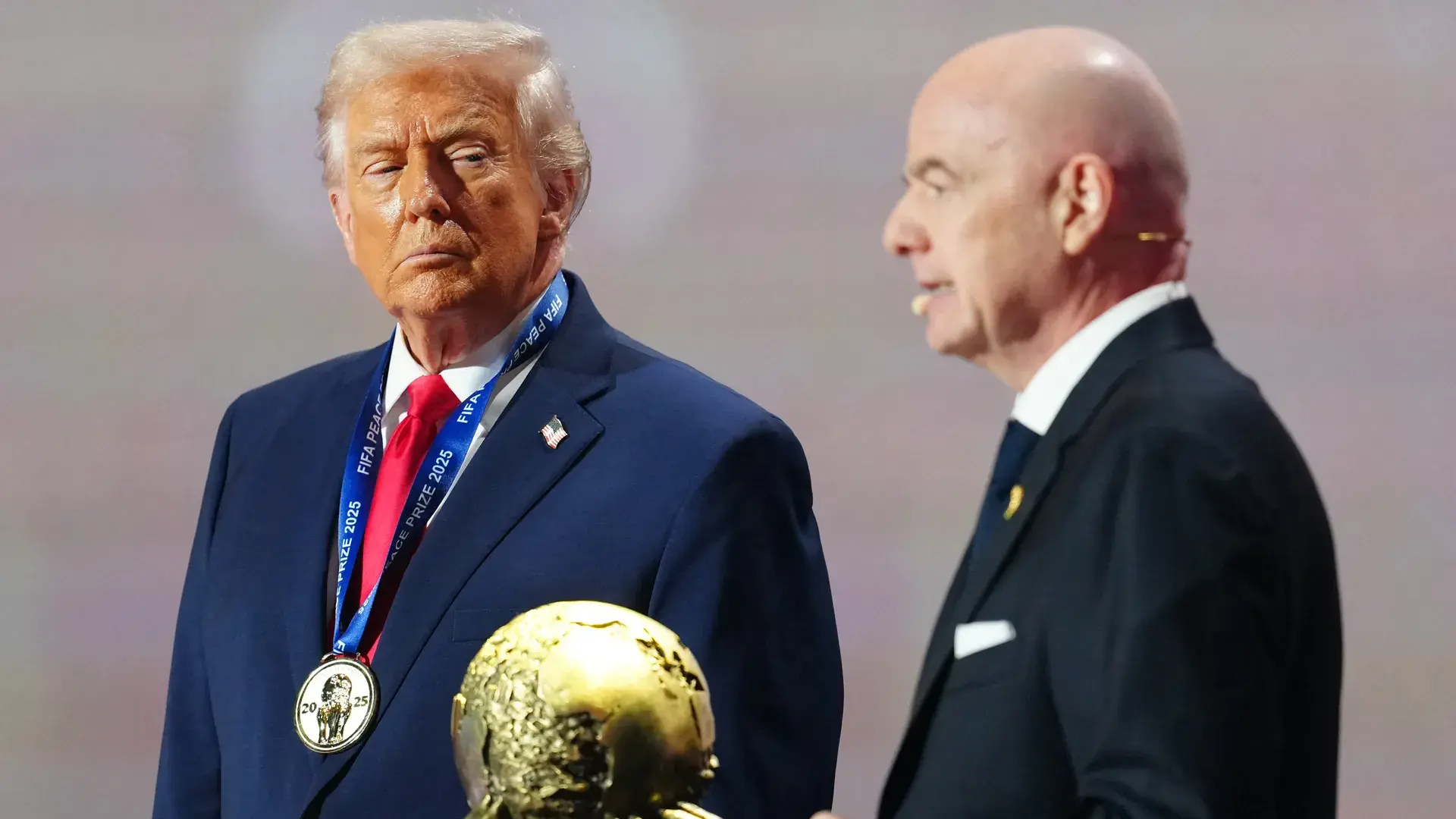
The story quickly escaped sports media.
Political commentators, journalists, activists and international audiences joined football supporters in debating whether FIFA had compromised its independence.
The discussion illustrates how sporting controversies increasingly evolve into global reputation issues once politics becomes involved.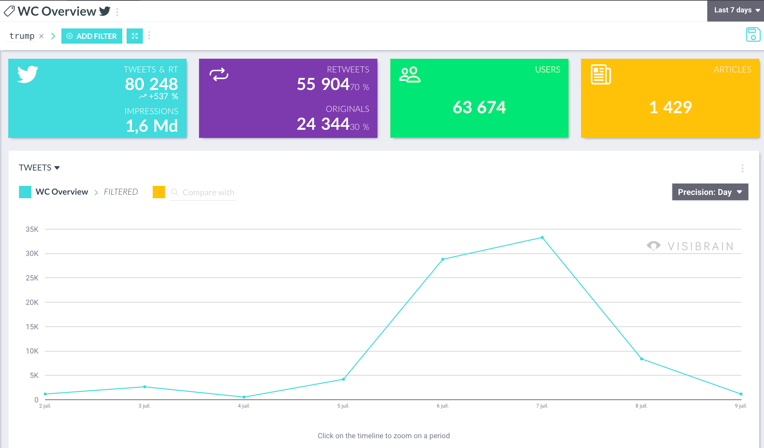

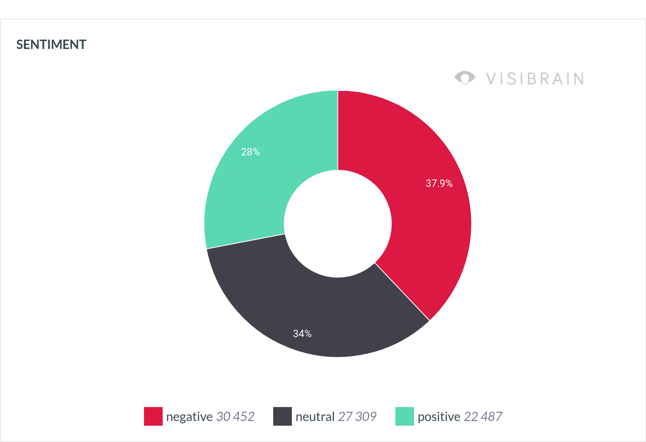
Nearly 38% of all posts carried negative sentiment, unusually high for a sporting discussion.
Much of the criticism centred not on Balogun himself, but on FIFA's governance and Trump's perceived influence over international sport.
The controversy demonstrates how social listening can identify shifts in public perception before they become lasting reputation problems.
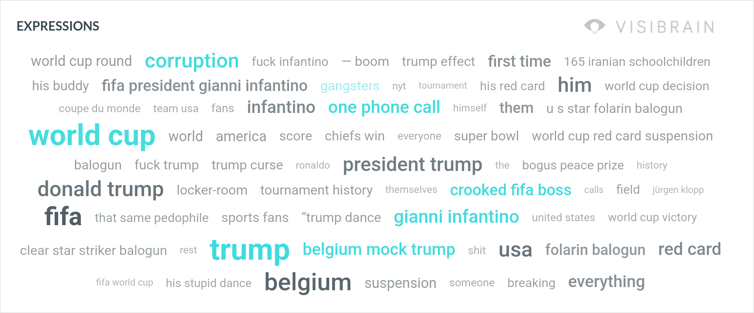
Analysis of Visibrain's expression cloud reveals several dominant narratives emerging simultaneously:
Political influence
Expressions like one phone call suggested many users believed political connections influenced FIFA's decision-making.
Institutional trust
Terms such as corruption and crooked FIFA boss reflected longstanding criticism of FIFA's governance rather than this incident alone.
Sporting humiliation
After Belgium defeated the United States 4-1, conversation shifted from the suspension decision to mocking both Trump and FIFA, with "Belgium mock Trump" becoming one of the most shared themes.
Not all World Cup conversations have been positive.
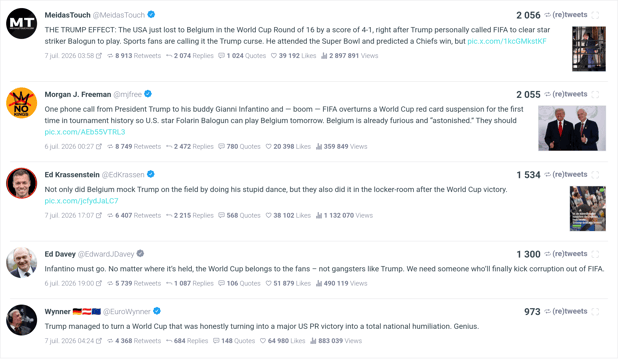
Several highly-engaged posts framed the incident as evidence of political interference.
Among the most shared narratives were:
Interestingly, many of the most viral posts came from political commentators rather than football journalists, illustrating how conversations can rapidly cross communities on social media.
A disciplinary decision became an international political debate within hours once high-profile political figures were linked to the event.
The discussion expanded well beyond football fans to include political commentators, journalists and international media. Monitoring only sports conversations would have missed much of the online reaction.
While 80,000 posts demonstrate the scale of discussion, analysing recurring expressions such as corruption, gangsters and one phone call provides a clearer understanding of why audiences reacted so strongly.
Whether or not Trump's intervention directly influenced FIFA's decision, the online reaction shows how quickly governance controversies can become reputation crises.
For organisations operating in highly visible sectors, from sport to politics to global brands, social listening provides an early warning system for identifying emerging narratives before they become entrenched.
As this case demonstrates, monitoring conversation volume is only the beginning. Understanding sentiment, recurring language and the accounts driving discussion is what allows communications teams to respond effectively.
Newsletter
.png?width=1090&height=1330&name=CTA%20newsletter%20(1).png)