Reputation Management
Effortlessly and accurately track the web and social network impact of your brand

Why Visibrain
Our Coverage
The best coverage across the web and social networks
Our Technology
Our intuitive interface uses cutting-edge technology
Our Support
Our team is with you every step of the way
Featured
5 Easy Steps to choose the Right Social Listening Tool

Learn more
Our clients
Brands
Visibrain for brands
Institutions & Local Authorities
Visibrain for institutions and local authorities
Agencies
Visibrain for agencies
Success Stories
Discover how our clients use Visibrain
Client stories
How LVMH is using LinkedIn monitoring to boost its influence with Visibrain

Read the case study
Resources
Blog
Stay up to date
White Papers
Studies, industry analysis and advanced insights
Case studies
Our client stories
Help center
Guides and resources for users
Newsletter
Stay up to date with the latest Visibrain news!
Webinars
Our upcoming webinars.
Our Last Study
Employee Advocacy Tracking Toolkit

Download the full guide
The “before/after” format has established itself as one of the most popular types of content on TikTok. Whether it’s home renovations, interior design, fitness, house cleaning, hairstyling, or beauty, transformation videos span numerous categories and generate significant engagement.
The #BeforeAndAfter hashtag alone has amassed more than 5.4 million videos posted on the platform. Its alternative, #BeforAfter, has more than 5.1 million videos. Even more impressive, the hashtag #BeforeAndAfter has surpassed 105 billion views, illustrating the popularity of this format among the platform’s users.
This momentum remains particularly strong during the summer months. Over the past 30 days, more than 21,100 videos have been posted under these hashtags, generating nearly 95 million views. These figures confirm that the “before/after” format is much more than just a passing trend: it’s a lasting format capable of capturing attention and encouraging sharing.

While the “before/after” format applies to a wide range of topics, three themes account for the bulk of conversations on TikTok.
Over the past 30 days, posts have primarily centered on:
Home renovation and home decor, accounting for 25% of posts (in orange)
Housekeeping, accounting for 18% of posts (in blue)
Makeup, which accounts for 15% of posts (in pink)
These three categories alone account for nearly 6 out of every 10 posts, illustrating users’ enthusiasm for content showcasing transformations in everyday life.
.png?width=1164&height=552&name=visibrain-before-after%20(1).png)
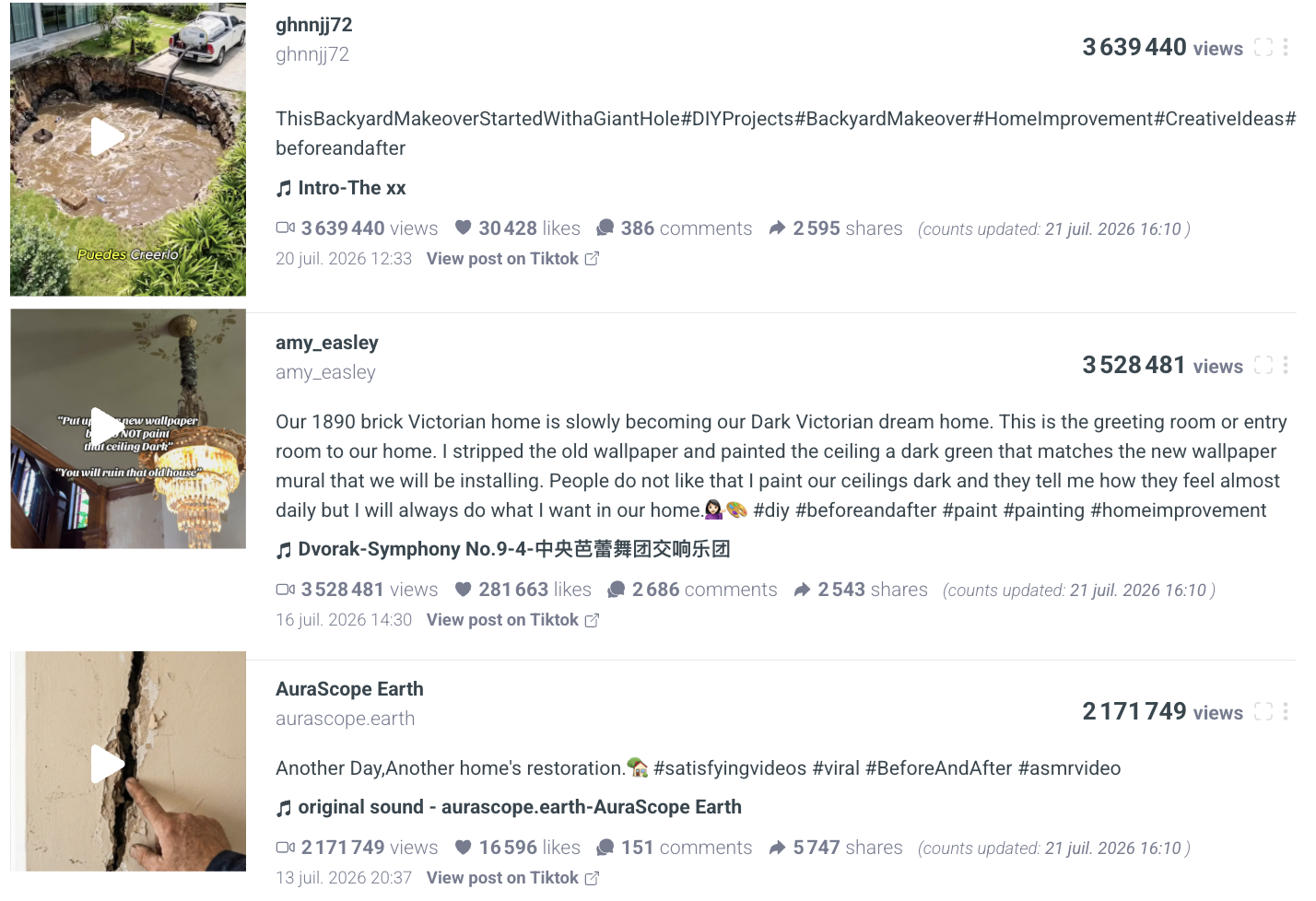
The first category to stand out, home renovation and home decor are generating real enthusiasm among users. Beyond the volume of posts, this theme also generates the most engagement, with 32.5 million views recorded over the past month.
This level of visibility far exceeds that of other categories: home renovation accounts for 90% more views than makeup, which is nonetheless the second-largest category within this trend.
Among the top-performing content, some videos have surpassed 3.5 million views. The most successful posts don’t focus on simple everyday improvements, but rather on major transformations: new construction, complete renovations, or significant changes to living spaces.
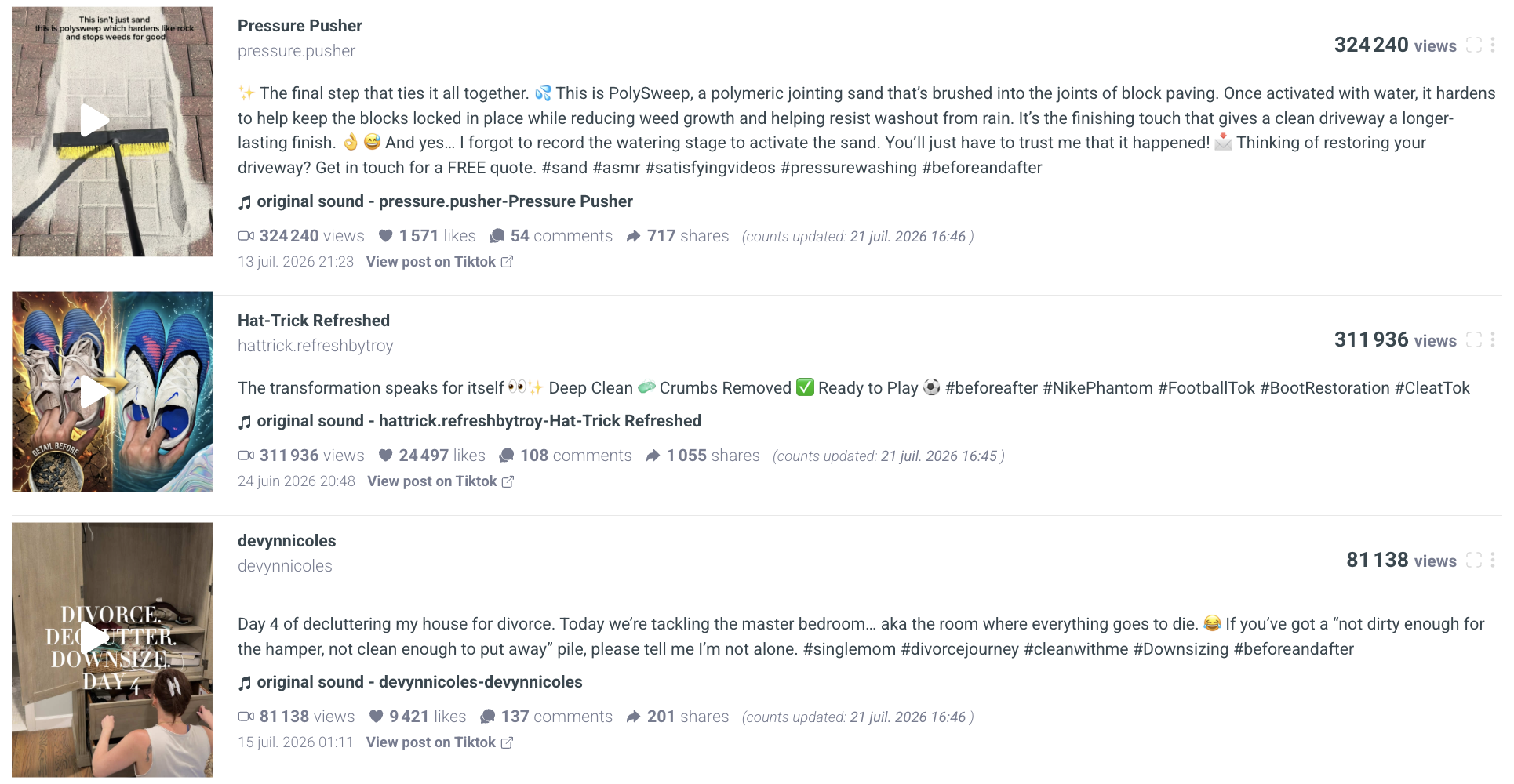
Another theme, closely related to the previous one but distinct: household routines. This includes anything even remotely related, ranging from cleaning sneakers and floors to life-changing events like divorce—all with the goal of gaining clarity:
The third major theme of the Before/After trend is the world of makeup and skincare, which plays a significant role in discussions. With over 17.2 million views, this content draws on highly engaged communities driven by a strong passion for this field.
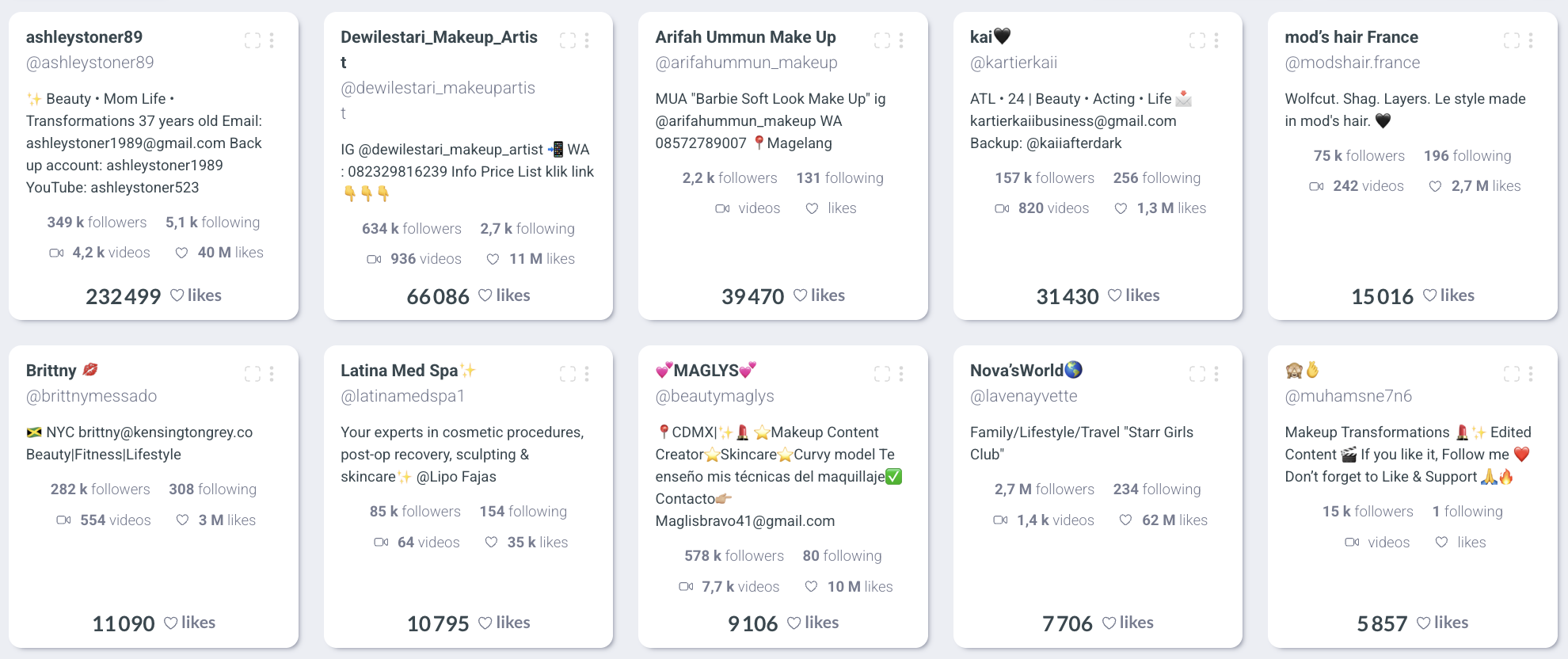
Among the most influential profiles, several directly highlight their expertise or interest in the subject: some bios specifically mention working as makeup artists or a genuine passion for makeup and beauty. This community aspect helps boost the visibility of these transformations, where the final result and the demonstration of skill play a central role.
The success of the before-and-after format has not gone unnoticed by brands, an increasing number of which are incorporating it into their content strategy on TikTok. From household products and cosmetics to e-commerce retailers and entertainment companies, a wide variety of industries are using this format to demonstrate the effectiveness of their products or showcase transformations.
Leading the pack is The Pink Stuff, already very popular on TikTok thanks to its cleaning products. The brand largely dominates conversations around “before and after” content, with over 1.7 million views generated over the past month. This performance is also driven by a consistent presence on the platform, with six videos posted on this theme during the period.
The German subsidiary of Benefit Cosmetics ranks second with over 690,000 views, driven by makeup transformation content. More surprisingly, the mobile version of Call of Duty rounds out the top three with 603,873 views, proving that the “before and after” format extends far beyond sectors traditionally associated with beauty or home and adapts to a wide variety of topics.
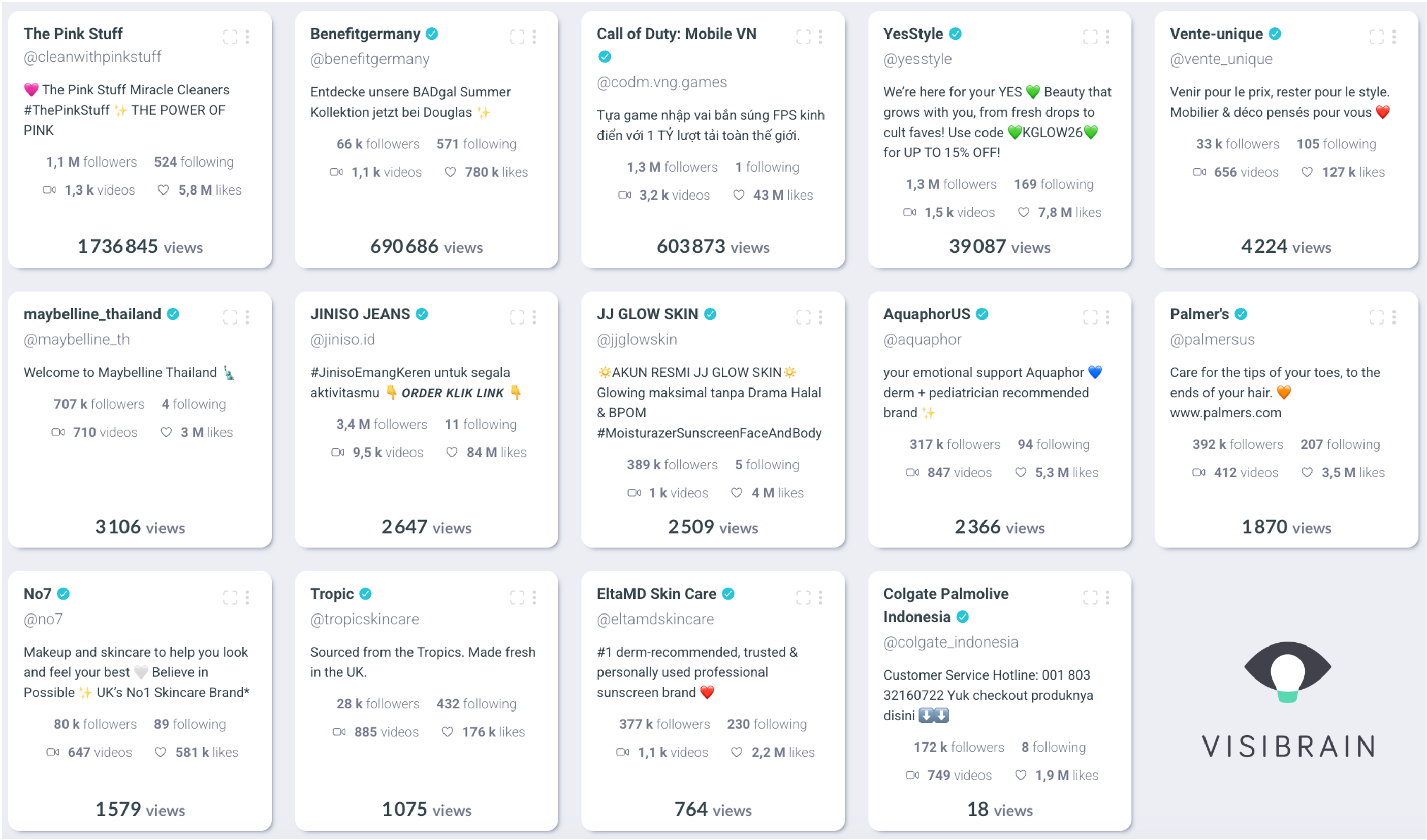
The Pink Stuff: 1.7 million views
Benefit: 690,686 views
Call of Duty - Mobile VN: 603,873 views
YesStyle: 39,087 views
Vente-Unique: 4,224 views
Maybelline Thailand: 3,106 views
JINISO JEANS: 2,647 views
JJ GLOW SKIN: 2,509 views
Aquaphor US: 2,366 views
Palmer’s: 1,870 views
No7: 1,579 views
Tropic: 1,075 views
EltaMD Skin Care: 764 views
Colgate Palmolive Indonesia: 18 views
The brand at the top of the rankings isn’t just riding the “before and after” trend. It integrates it into a broader content strategy, showcasing different product lines and leveraging complementary hashtags such as #CleaningHacks, #CleaningTips, and #CleaningMotivation.
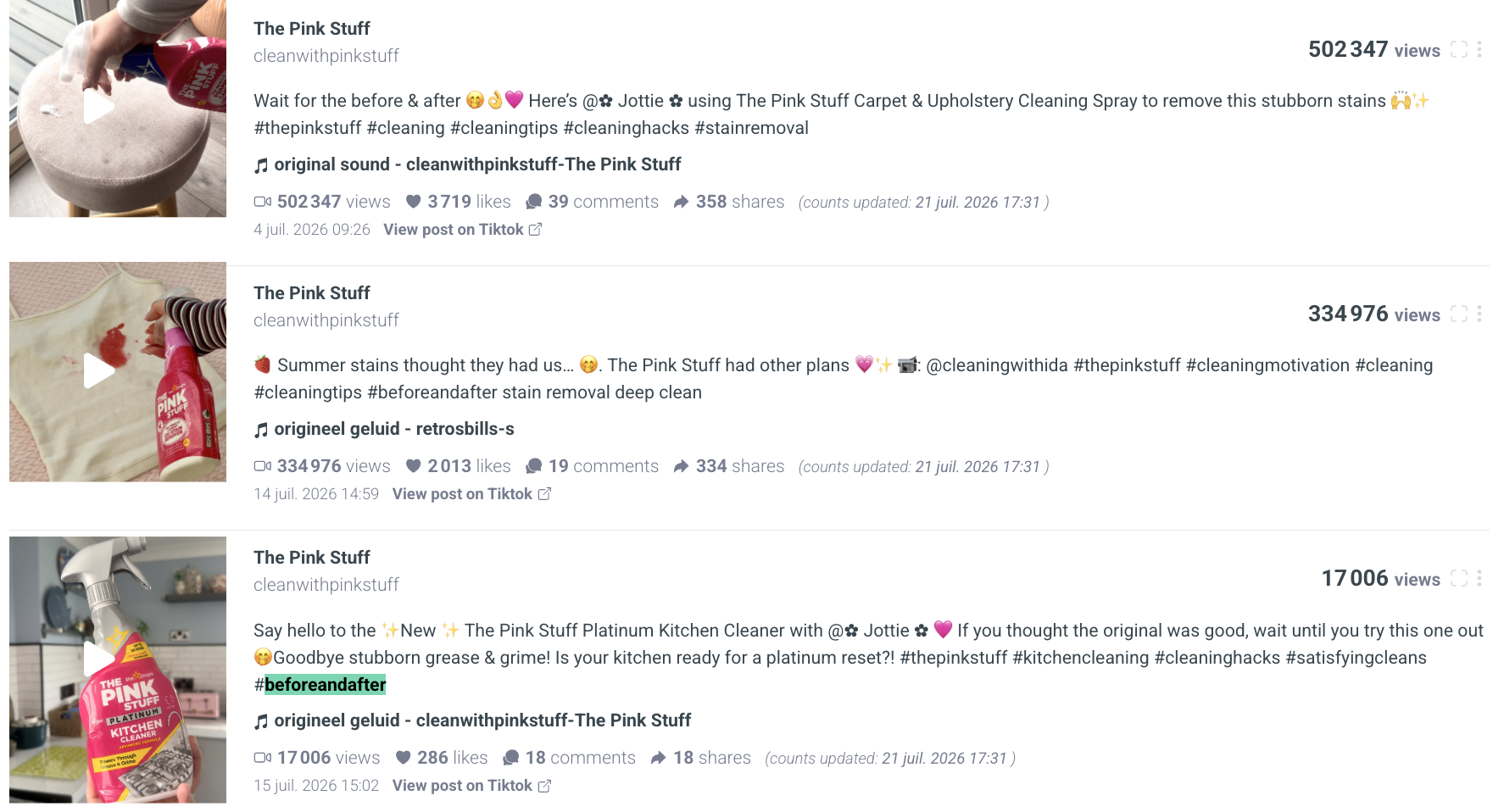
Its videos focus on very practical, everyday applications: removing seasonal stains, such as strawberry stains in the summer; recommending products to incorporate into your cleaning routine; and showcasing the brand’s latest offerings. By combining demonstrations, tips, and visual transformations, The Pink Stuff fully leverages the elements that make the “before and after” format so successful on TikTok. The brand’s videos are viewed, on average, 283,300 times, including:
While home-related content dominates conversations, cosmetics and skincare brands are also making extensive use of the before-and-after format. Among the most prominent are Benefit Germany, YesStyle, Maybelline Thailand, and Aquaphor US, which use this narrative style to demonstrate the effectiveness of their products.
The transformations highlighted vary by category: Benefit Germany showcases the results of eyebrow shaping, YesStyle highlights the effects of a Korean hair care product, while Maybelline Thailand demonstrates how well its foundation holds up in different weather conditions.
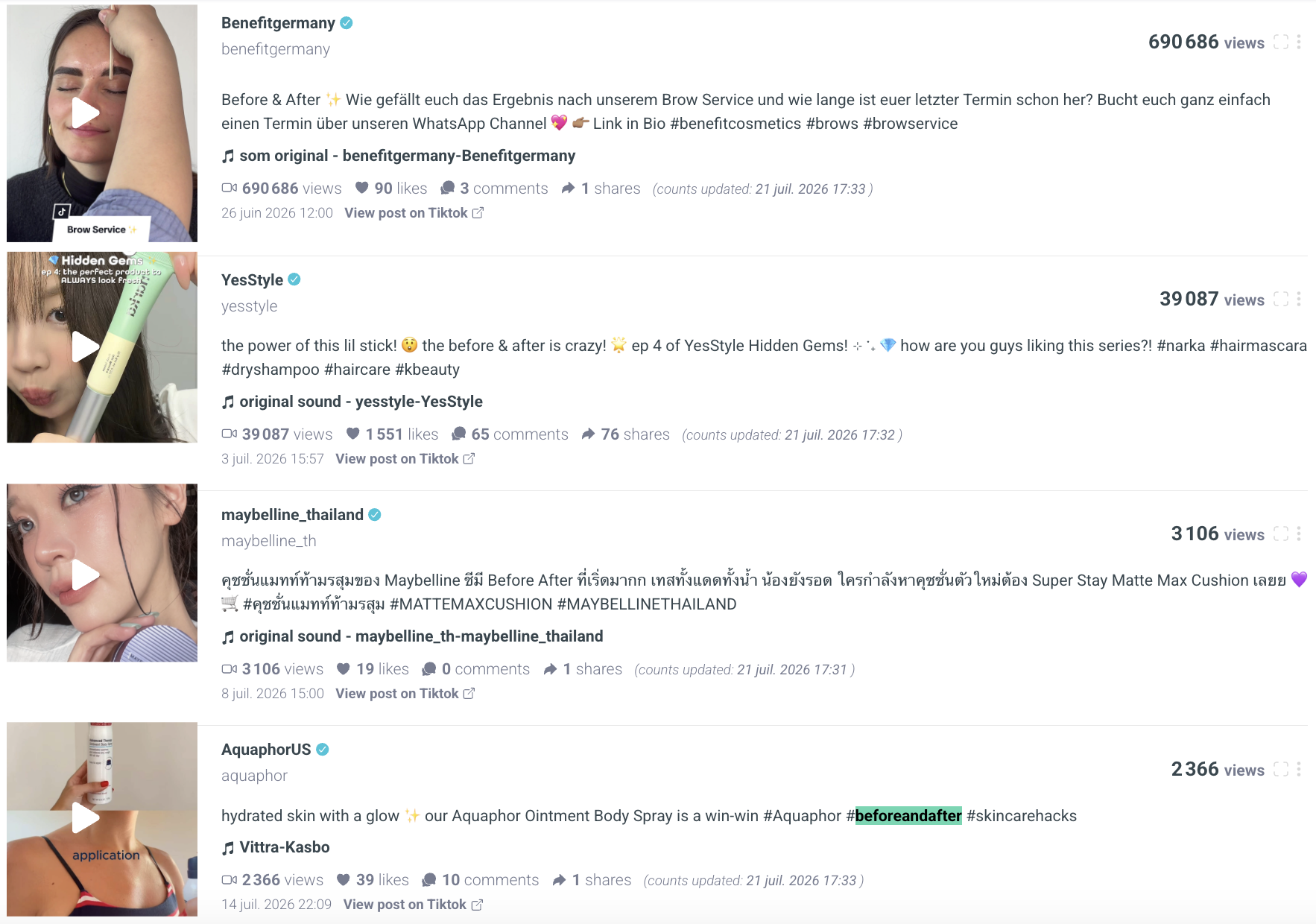
For its part, Aquaphor US adopts a structured approach by breaking down the demonstration into three sequences: the product, its application, and the final result. This simple structure draws on the “before and after” format and makes the product’s promise immediately visible to users:
The “before and after” format isn’t limited to physical or aesthetic transformations. Call of Duty Mobile offers its own take on it by applying it directly to the game itself. The brand compares two ways of playing using a split screen, visually illustrating a “before” and an “after” to highlight the benefits of a specific gameplay technique or strategy. This video alone has been viewed more than 603,000 times.
Among the most frequently mentioned brands in conversations related to the “before/after” trend, beauty brands take center stage. A key insight emerges: Korean brands are reaffirming their strong appeal on social media and are also capitalizing on the buzz surrounding this format.
The ranking highlights several iconic K-Beauty brands, including YesStyle, Beauty of Joseon, COSRX, and SKIN1004, which are among the most frequently mentioned. This trend illustrates the growing influence of Korean cosmetics within digital communities.
Beyond this Korean breakthrough, conversations about “before and after” remain largely dominated by the beauty industry: with the exceptionof IKEA andAmazon, all the brands in this ranking operate in the cosmetics and skincare sectors. The format thus appears to be a particularly effective tool for brands capable of visually demonstrating a transformation or a result.
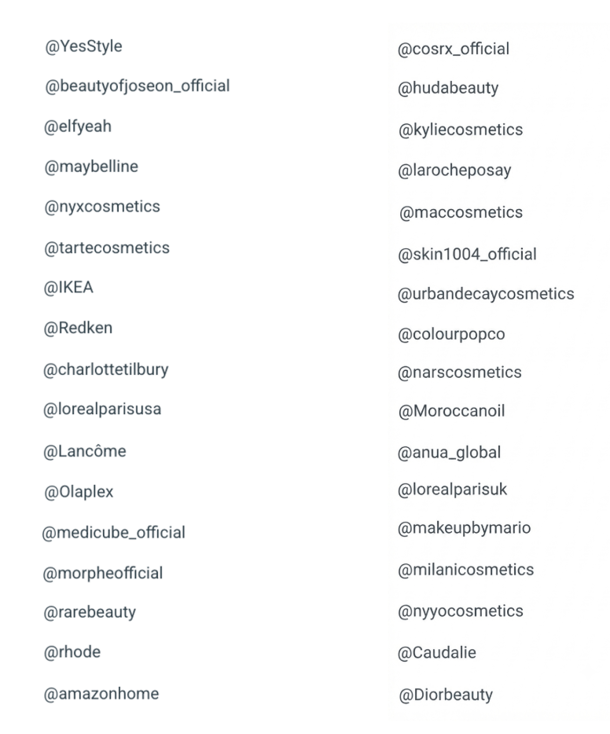
Korean brands occupy a prominent place in conversations about “before and after.” Among the most frequently mentioned are YesStyle and Beauty of Joseon, which top the rankings, followed notably by COSRX and SKIN1004. This finding confirms internet users’ enthusiasm for K-Beauty and the results associated with its products.
The content published features a wide variety of formats: mask reviews, skincare routines, hauls, product pairings, and even before-and-after demonstrations. The before-and-after format has thus become a key tool for illustrating tangible results and reinforcing the credibility of the recommendations shared by content creators.
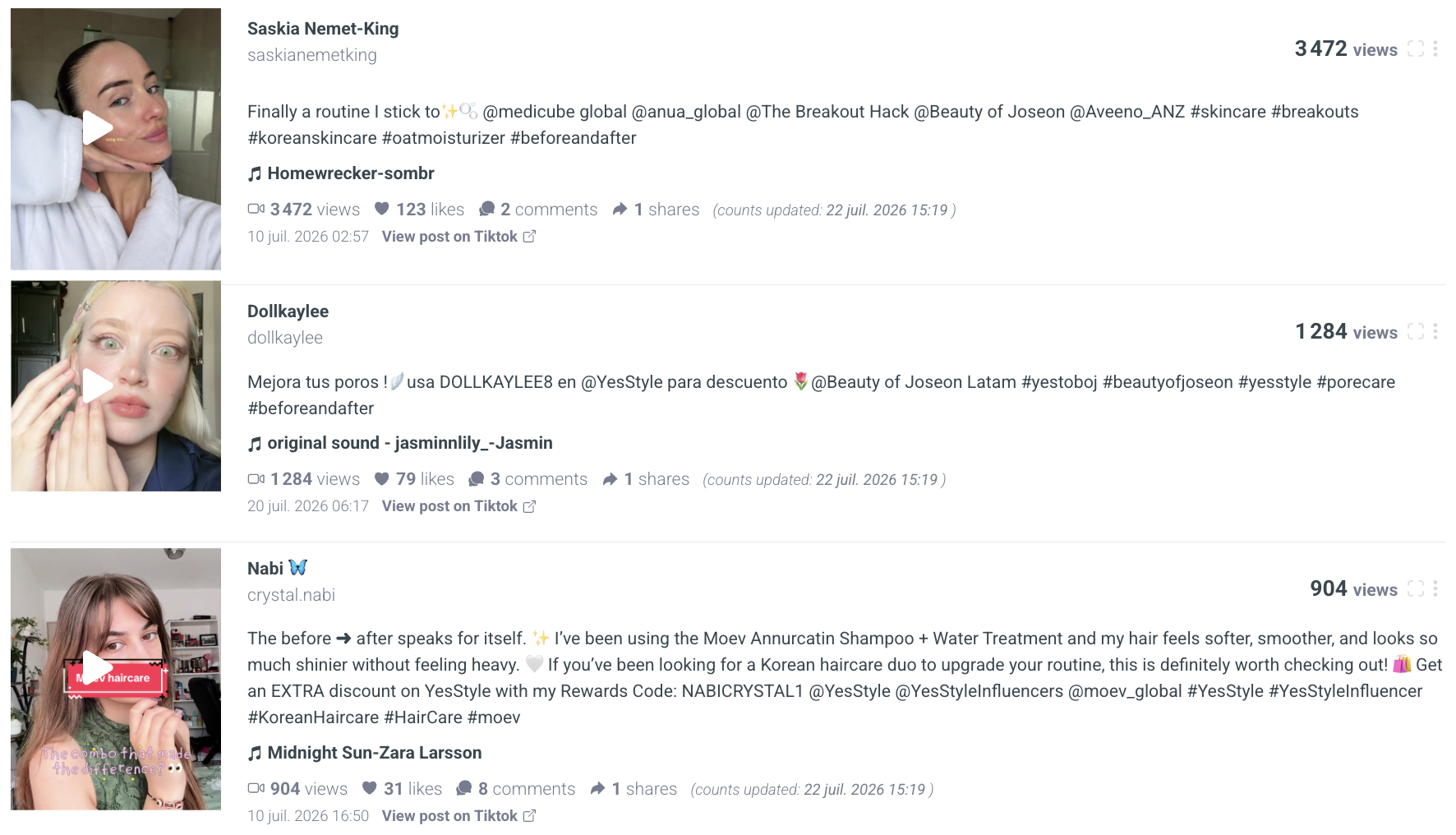
Aside from cosmetics brands, two retailers stand out in the rankings: IKEA and Amazon.
IKEA has established itself as a go-to source for storing and organizing beauty products. Content featuring bathroom makeovers, beauty closets, and “before and after” videos contributes to the brand’s visibility.
For its part, Amazon stands out as a go-to channel for discovering and purchasing products that have gone viral. Many videos highlight selections of products spotted on the platform. In the example below, a Biodance mask—popularized by the K-Beauty trend—is presented as a must-have find available on Amazon:
Original article by Marie Guyomarc'h, adapted and translated by Sophie von Mensenkampff
Newsletter
.png?width=1090&height=1330&name=CTA%20newsletter%20(1).png)