Reputation Management
Effortlessly and accurately track the web and social network impact of your brand

Why Visibrain
Our Coverage
The best coverage across the web and social networks
Our Technology
Our intuitive interface uses cutting-edge technology
Our Support
Our team is with you every step of the way
Featured
5 Easy Steps to choose the Right Social Listening Tool

Learn more
Our clients
Brands
Visibrain for brands
Institutions & Local Authorities
Visibrain for institutions and local authorities
Agencies
Visibrain for agencies
Success Stories
Discover how our clients use Visibrain
Client stories
How LVMH is using LinkedIn monitoring to boost its influence with Visibrain

Read the case study
Resources
Blog
Stay up to date
White Papers
Studies, industry analysis and advanced insights
Case studies
Our client stories
Help center
Guides and resources for users
Newsletter
Stay up to date with the latest Visibrain news!
Webinars
Our upcoming webinars.
Our Last Study
PR Crises in the AI Era
Download the full guide
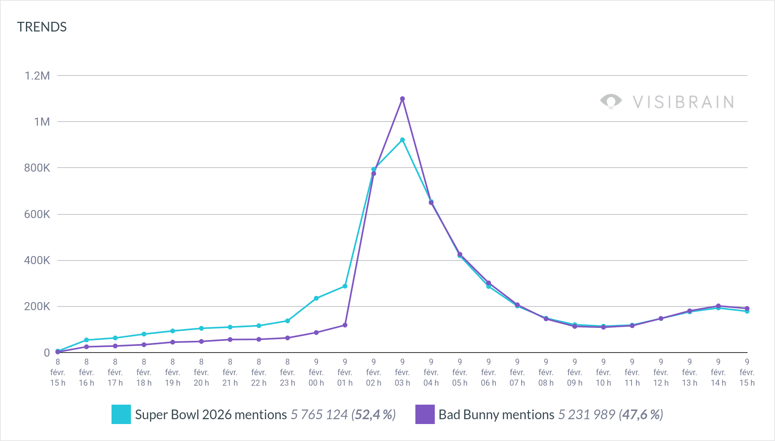
In total, the Super Bowl 2026 generated more than 5.7 million mentions across social platforms, representing an increase of around 900,000 mentions compared to 2025, an uplift of nearly 20% year on year. .png?width=1918&height=1092&name=202602081553_202602091553_quicktrends%20(1).png)
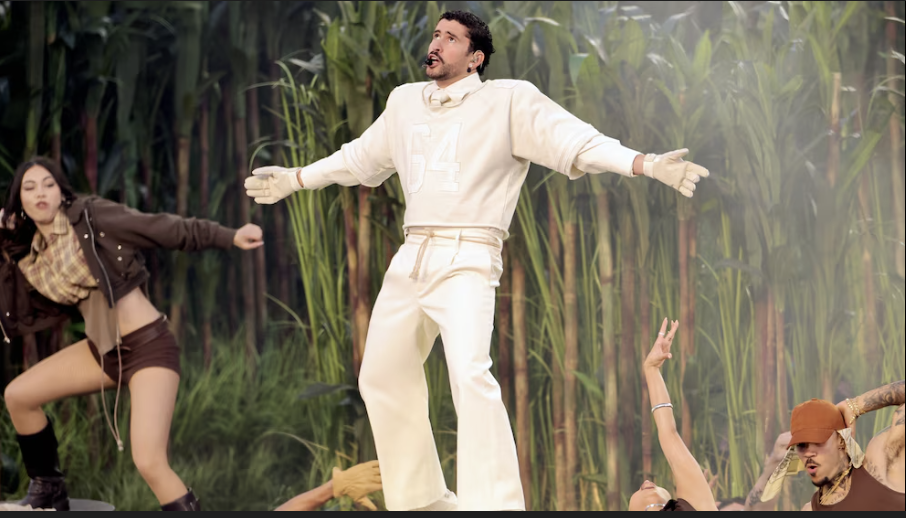
What stands out most, however, is how the half-time show reshaped the conversation. During Bad Bunny’s performance, mentions of the artist surpassed mentions of the Super Bowl itself. This is particularly striking when compared to last year’s event, where Kendrick Lamar generated around 1.6 million mentions and remained secondary to the broader event discussion. The scale of Bad Bunny’s visibility suggests that the current political and social climate amplified his presence well beyond music audiences, turning the half-time show into a focal point of national debate.
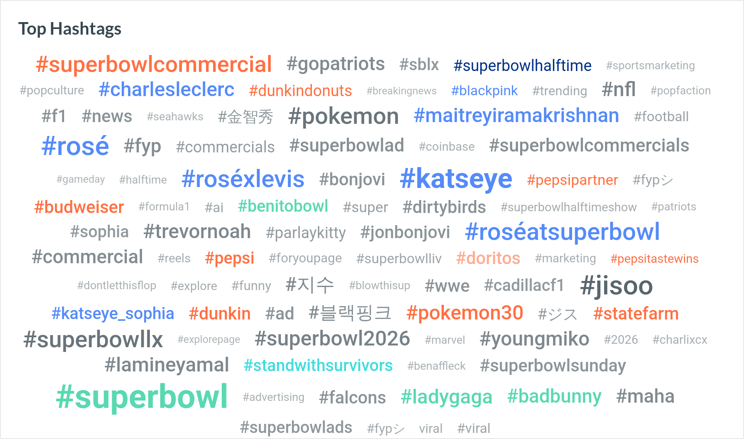
Analysis of the hashtag cloud tied to Super Bowl commercial breaks highlights a recurring dynamic: celebrity appearances (shown in blue) are often discussed more than the brands they represent (in orange) . Names of actors, influencers, and public figures featured in ads frequently dominated the conversation, eclipsing brand hashtags.
Beyond brand promotion, the Super Bowl also continues to function as a platform for advancing causes and societal messages. The presence of the #StandWithSurvivors commercial illustrates how advertisers and organisations are increasingly using this moment to step outside conventional marketing frameworks. Referencing the renewed public discourse following the release of documents linked to the Epstein case, the campaign tapped into an existing social conversation, demonstrating how Super Bowl airtime can be leveraged to contribute to wider debates rather than solely to sell products.

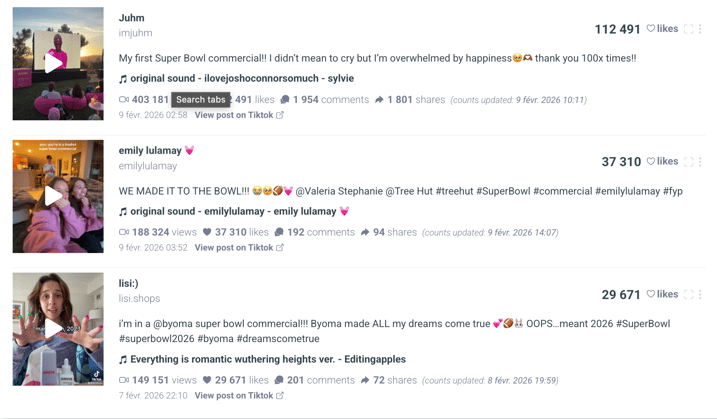
On TikTok, the most engaging Super Bowl-related posts were dominated by skincare brands Byoma and Tree Hut. Both brands successfully extended their commercial visibility through influencer-led activations rather than relying solely on the TV spot itself. In one of the top-performing videos, TikToker @imjuhm shared content from a Byoma-organised Super Bowl watch party, seamlessly blending brand presence with creator-led storytelling. This approach underscores TikTok’s role as a platform where experiential and behind-the-scenes content can significantly amplify campaign reach.
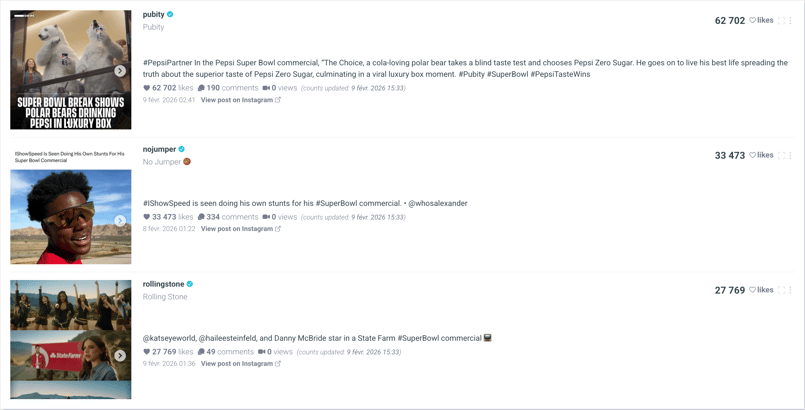
Instagram’s top posts reflected a more traditional advertising hierarchy, centred on high-production commercials and well-known personalities. Pepsi’s Super Bowl ad featured among the most engaging posts, alongside a post referencing streamer IShowSpeed who appeared in Oakley's superbowl commercial, whose presence bridged mainstream advertising and creator culture.
Another standout was the State Farm commercial starring Katseye, Hailee Steinfeld, and Danny McBride, demonstrating once again how recognisable faces drive engagement on visually led platforms like Instagram.
The list of the top ten most mentioned brands during the Super Bowl further echoes the patterns observed throughout our analysis.
State Farm
Uber Eats
Pringles
These brands benefited from their ability to connect with broader cultural moments, whether through celebrity appearances, creator partnerships, or socially resonant storytelling. Their prominence reinforces a key takeaway from this year’s event: sustained attention is driven less by logo exposure alone, and more by how effectively brands integrate themselves into the wider narrative of the Super Bowl.
The Super Bowl 2026 illustrates how the event has evolved into more than a sporting final or advertising showcase. From a politically charged half-time performance to commercials engaging with sensitive social issues, online conversations reflected broader societal tensions as much as brand creativity.
Social listening makes it possible to move beyond surface-level engagement metrics and understand why certain moments resonate. For brands, the lesson is clear: success during the Super Bowl increasingly depends on cultural awareness, platform-specific strategies, and the ability to anticipate how audiences will react in real time, not just on the screen, but across social media.
Newsletter
.png?width=1090&height=1330&name=CTA%20newsletter%20(1).png)