Reputation Management
Effortlessly and accurately track the web and social network impact of your brand

Why Visibrain
Our Coverage
The best coverage across the web and social networks
Our Technology
Our intuitive interface uses cutting-edge technology
Our Support
Our team is with you every step of the way
Featured
5 Easy Steps to choose the Right Social Listening Tool

Learn more
Our clients
Brands
Visibrain for brands
Institutions & Local Authorities
Visibrain for institutions and local authorities
Agencies
Visibrain for agencies
Success Stories
Discover how our clients use Visibrain
Client stories
How LVMH is using LinkedIn monitoring to boost its influence with Visibrain

Read the case study
Resources
Blog
Stay up to date
White Papers
Studies, industry analysis and advanced insights
Case studies
Our client stories
Help center
Guides and resources for users
Newsletter
Stay up to date with the latest Visibrain news!
Webinars
Our upcoming webinars.
Our Last Study
PR Crises in the AI Era

Download the full guide

Originally conceived as a summer denim campaign, “Sydney Sweeney Has Great Jeans” relied on wordplay and celebrity influence to capture attention. Instead, it sparked widespread online discussion, critique, and reinterpretation.
What followed was not a typical campaign lifecycle. The conversation moved beyond fashion marketing into broader cultural commentary, dramatically extending the campaign’s reach and visibility.
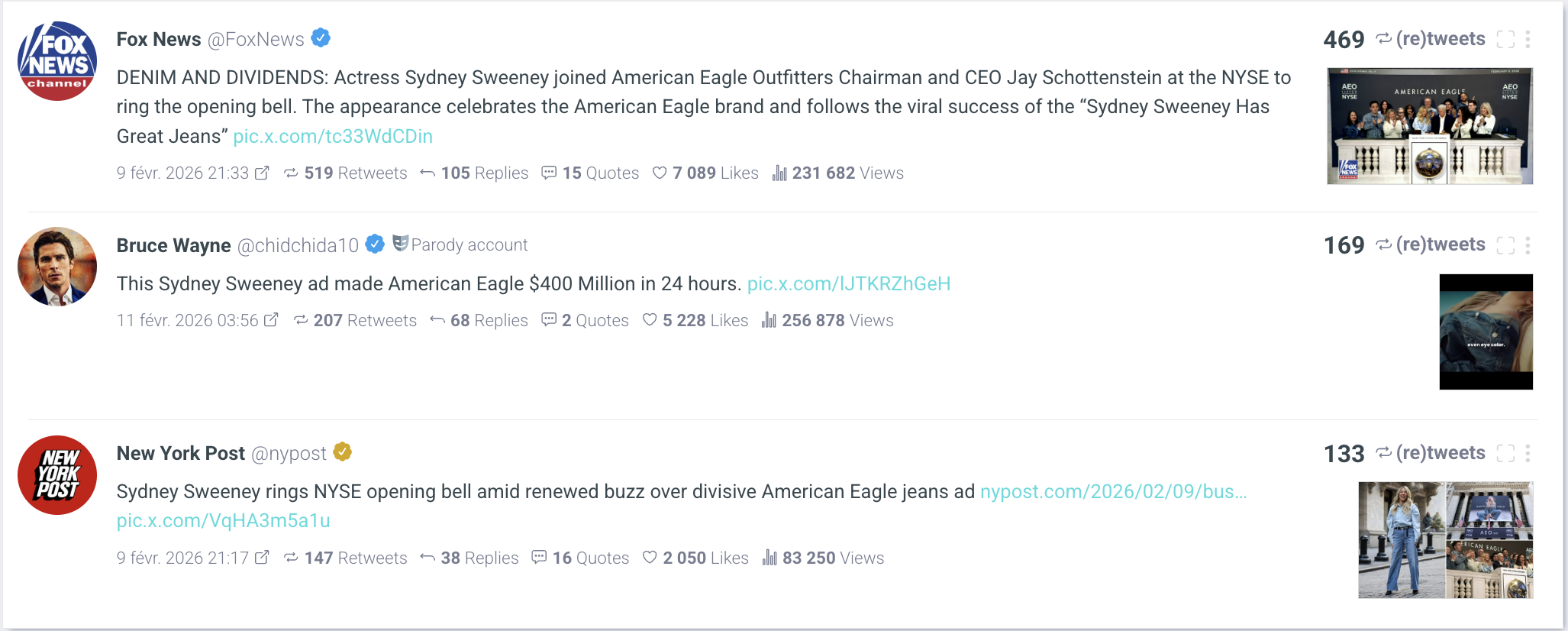
Rather than fading after its initial launch window, the campaign remained part of the public discourse for months culminating in the February 2026 NYSE appearance that effectively marked its transition from controversial launch to business milestone.
Social listening analysis shows just how concentrated that attention was:
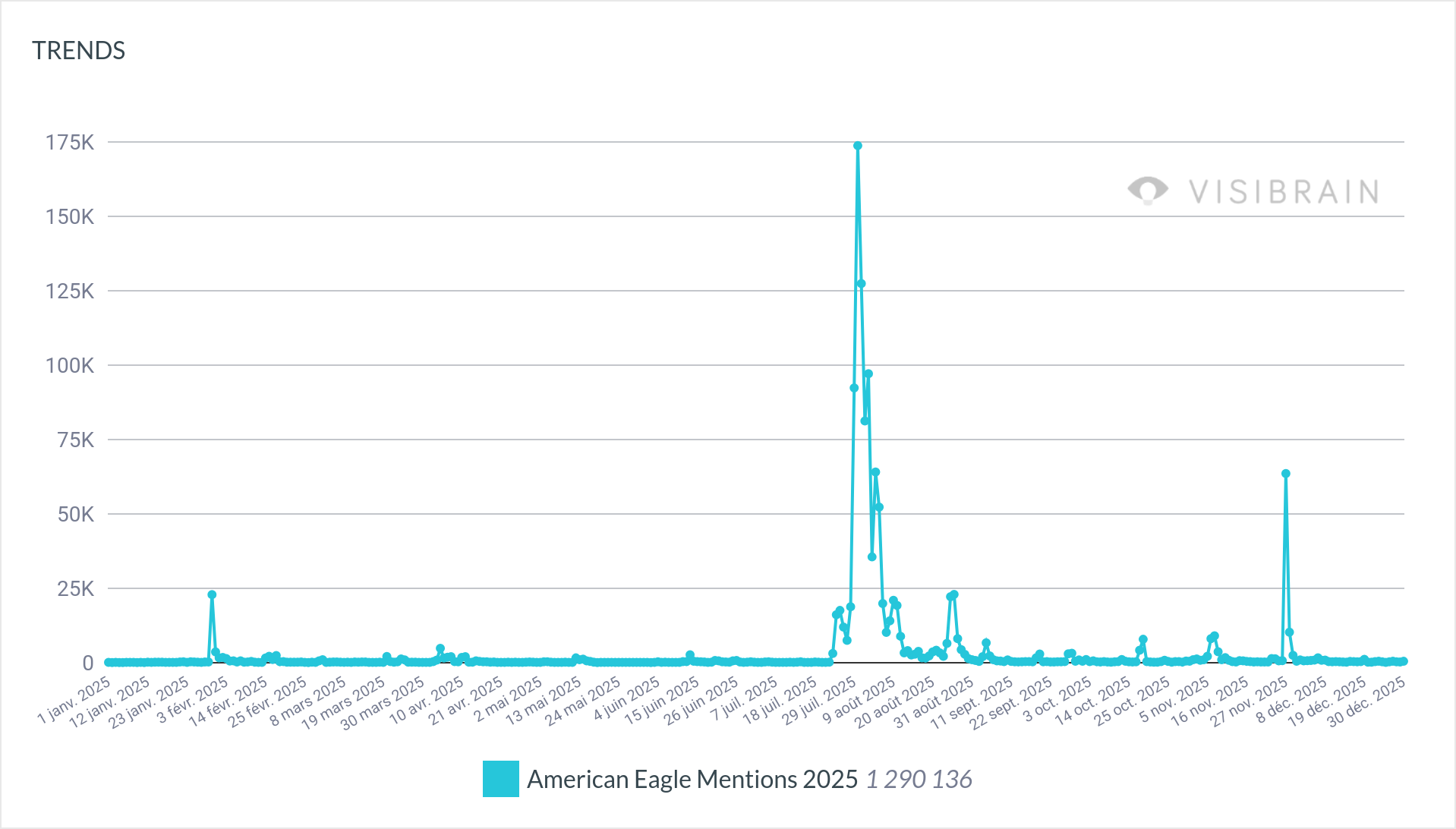
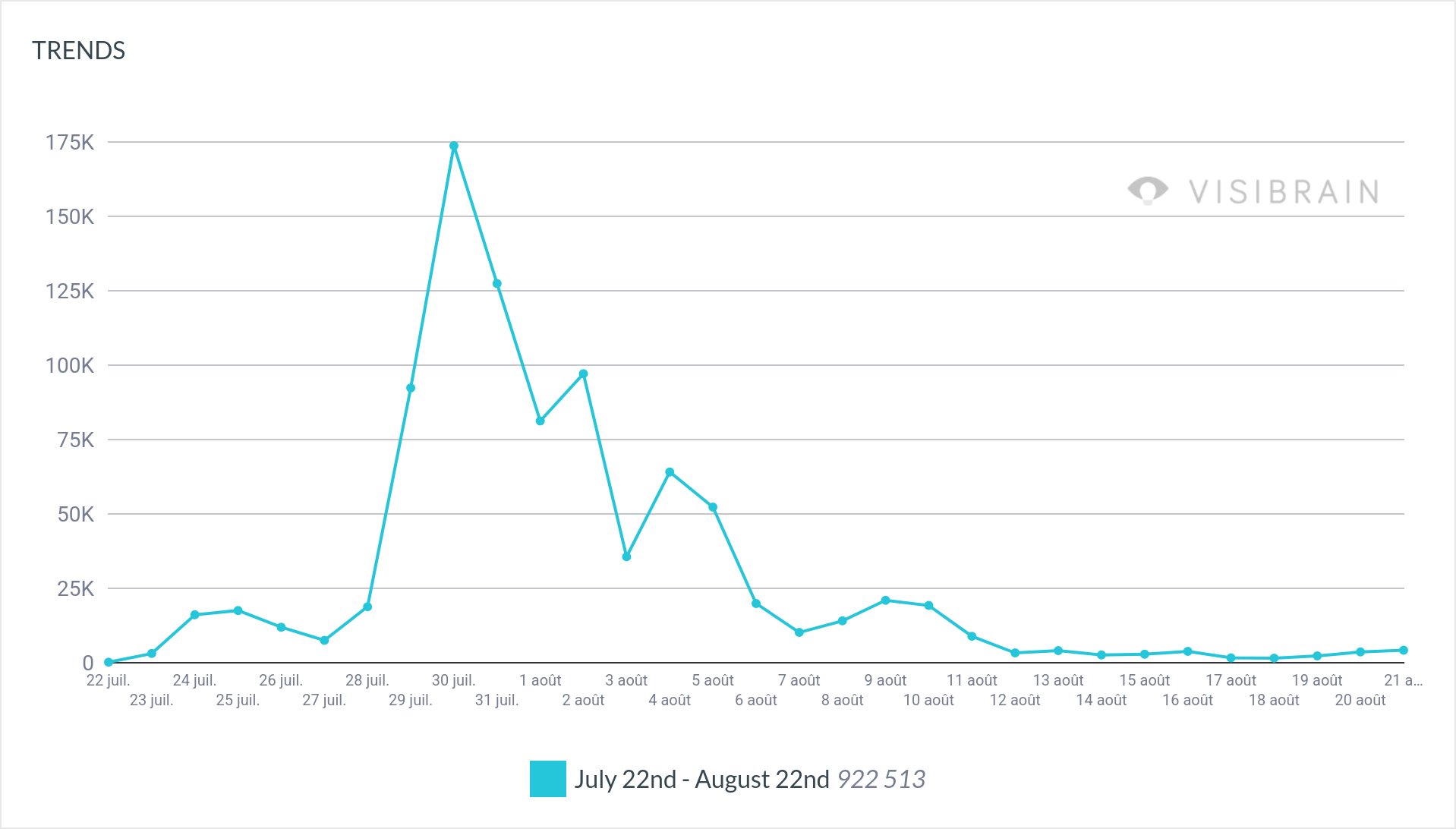
This is a textbook example of what can be described as attention compression, where a brand experiences a year’s worth of visibility in a matter of weeks.
Unlike sustained brand-building campaigns, this type of spike is driven by reaction dynamics: sharing, debate, commentary, and media pickup all acting as multipliers.

The Conversation Expanded Beyond the Brand.
The campaign became a cultural talking point, meaning audiences — not just marketers — carried the message forward.
The Brand Maintained Continuity.
American Eagle did not attempt to abruptly pivot or withdraw, allowing the conversation cycle to play out while maintaining product visibility.
Awareness Converted Into Commercial Interest
Heightened attention drove curiosity, search activity, and new audience exposure, demonstrating how polarising campaigns can expand reach beyond core consumers.
However, this type of outcome should not be mistaken for a replicable formula.
There is a thin line between generating conversation and triggering sustained backlash or boycott. Once a campaign enters the cultural arena, brands lose a degree of control over how their message is framed, politicised, or amplified.
Any organisation experiencing this level of exposure must move into heightened vigilance:
In high-velocity media cycles, a second misstep can undo the gains of the first.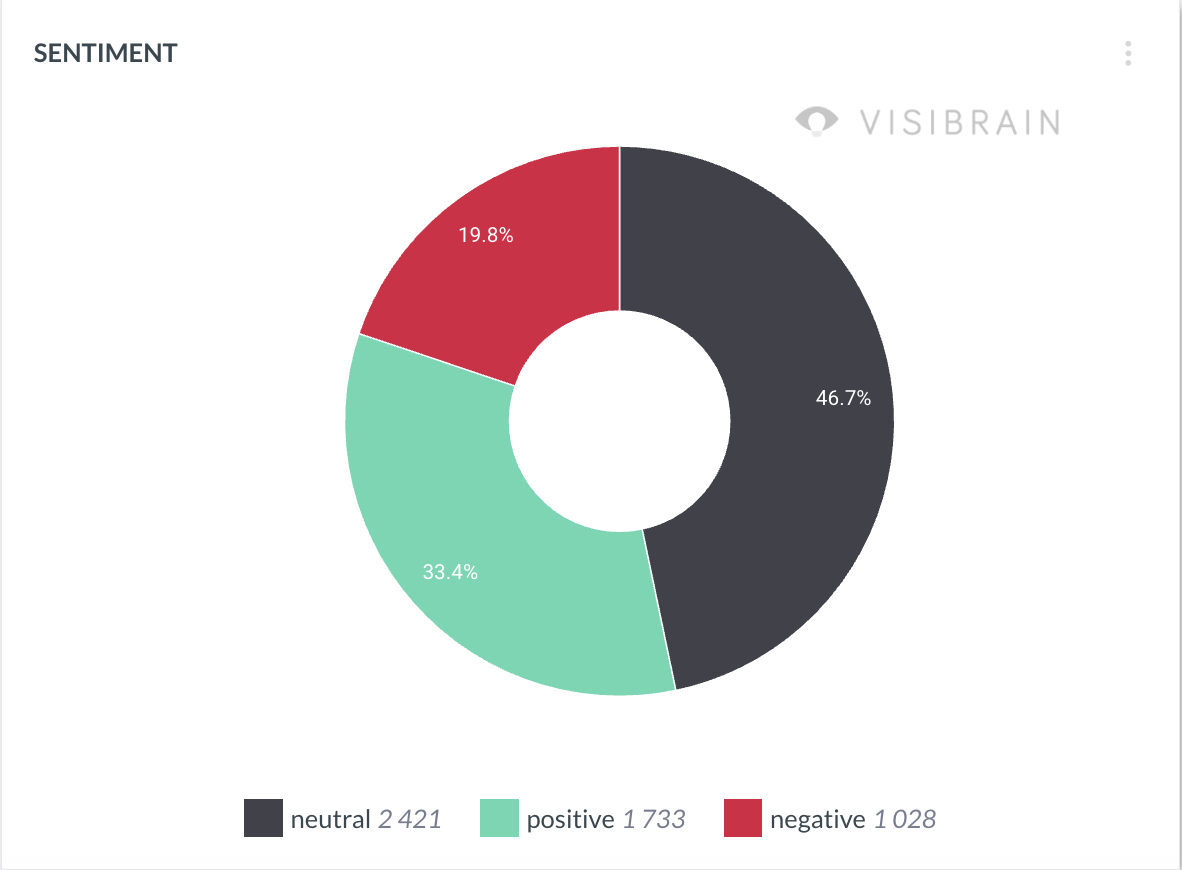
While the campaign delivered a significant spike in awareness, controversy is not, and cannot be, a long-term brand strategy.
Attention spikes create recognition, not loyalty. Without sustained investment in brand positioning, product value, and customer relationships, visibility risks becoming transient.
To convert a viral moment into durable equity, brands must shift from:
earning attention → to earning trust.
That requires follow-through campaigns, consistent storytelling, and experiences that reinforce why audiences should stay engaged once the debate fades.
American Eagle’s trajectory reflects a broader shift in PR. Communications teams are no longer managing isolated crises; they are navigating an ecosystem where risk, relevance, and growth are increasingly intertwined.
The objective is not to provoke controversy, but to be equipped, through data, to understand when unexpected attention can be stabilised and channelled into long-term value.
Handled carefully, moments of friction can unlock reach that traditional campaigns struggle to achieve. Mishandled, they can erode trust just as quickly.
The differentiator is not the controversy itself, but how well the brand is prepared to manage what follows.
Newsletter
.png?width=1090&height=1330&name=CTA%20newsletter%20(1).png)