Reputation Management
Effortlessly and accurately track the web and social network impact of your brand

Why Visibrain
Our Coverage
The best coverage across the web and social networks
Our Technology
Our intuitive interface uses cutting-edge technology
Our Support
Our team is with you every step of the way
Featured
5 Easy Steps to choose the Right Social Listening Tool

Learn more
Our clients
Brands
Visibrain for brands
Institutions & Local Authorities
Visibrain for institutions and local authorities
Agencies
Visibrain for agencies
Success Stories
Discover how our clients use Visibrain
Client stories
How LVMH is using LinkedIn monitoring to boost its influence with Visibrain

Read the case study
Resources
Blog
Stay up to date
White Papers
Studies, industry analysis and advanced insights
Case studies
Our client stories
Help center
Guides and resources for users
Newsletter
Stay up to date with the latest Visibrain news!
Webinars
Our upcoming webinars.
Our Last Study
Employee Advocacy Tracking Toolkit

Download the full guide
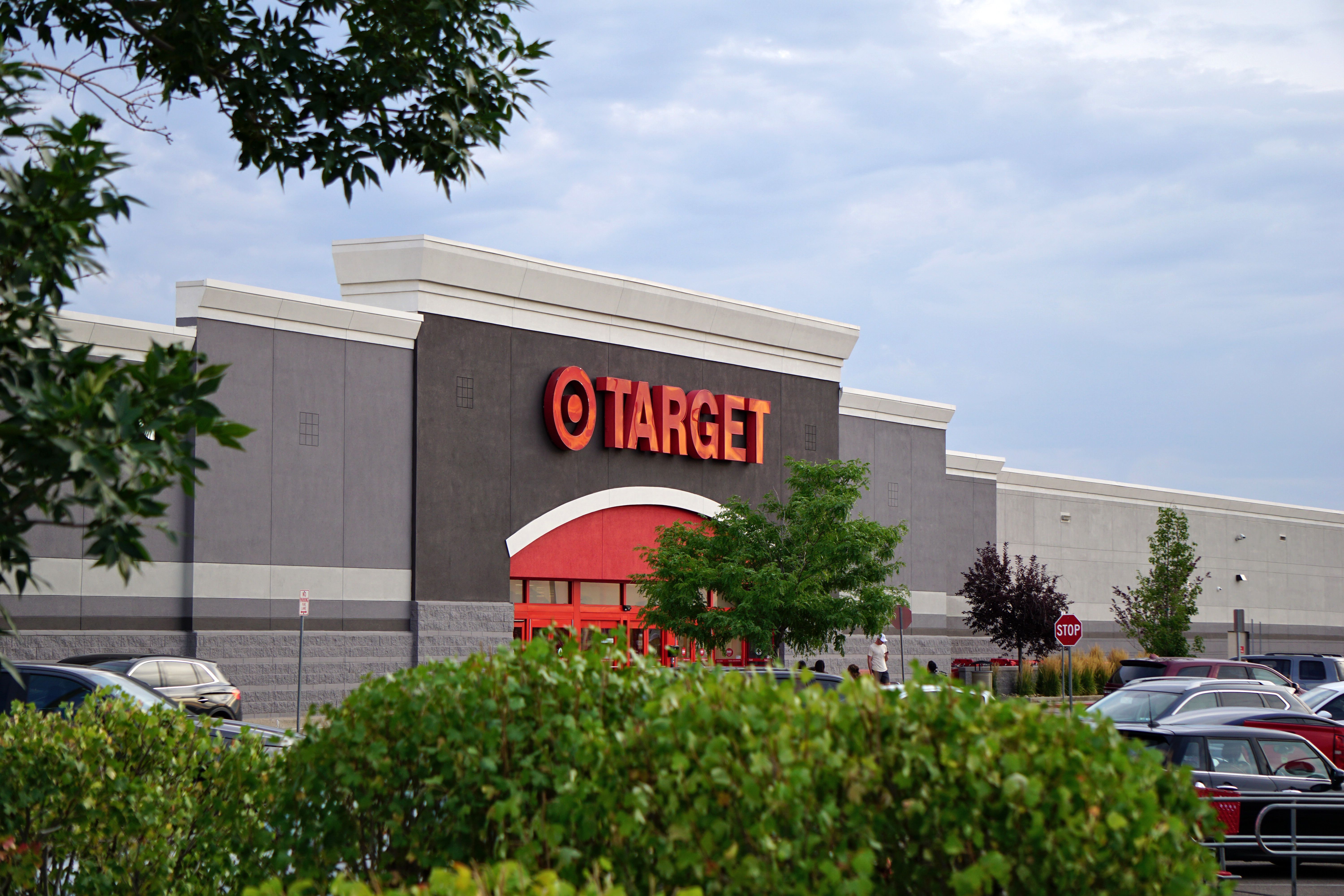
At first glance, the conversation around Target might look like a single wave of backlash. But mapping the accounts participating in the discussion reveals a much more fragmented picture. Rather than one unified audience, the conversation is made up of distinct communities, each bringing its own perspective, priorities and narratives to the controversy.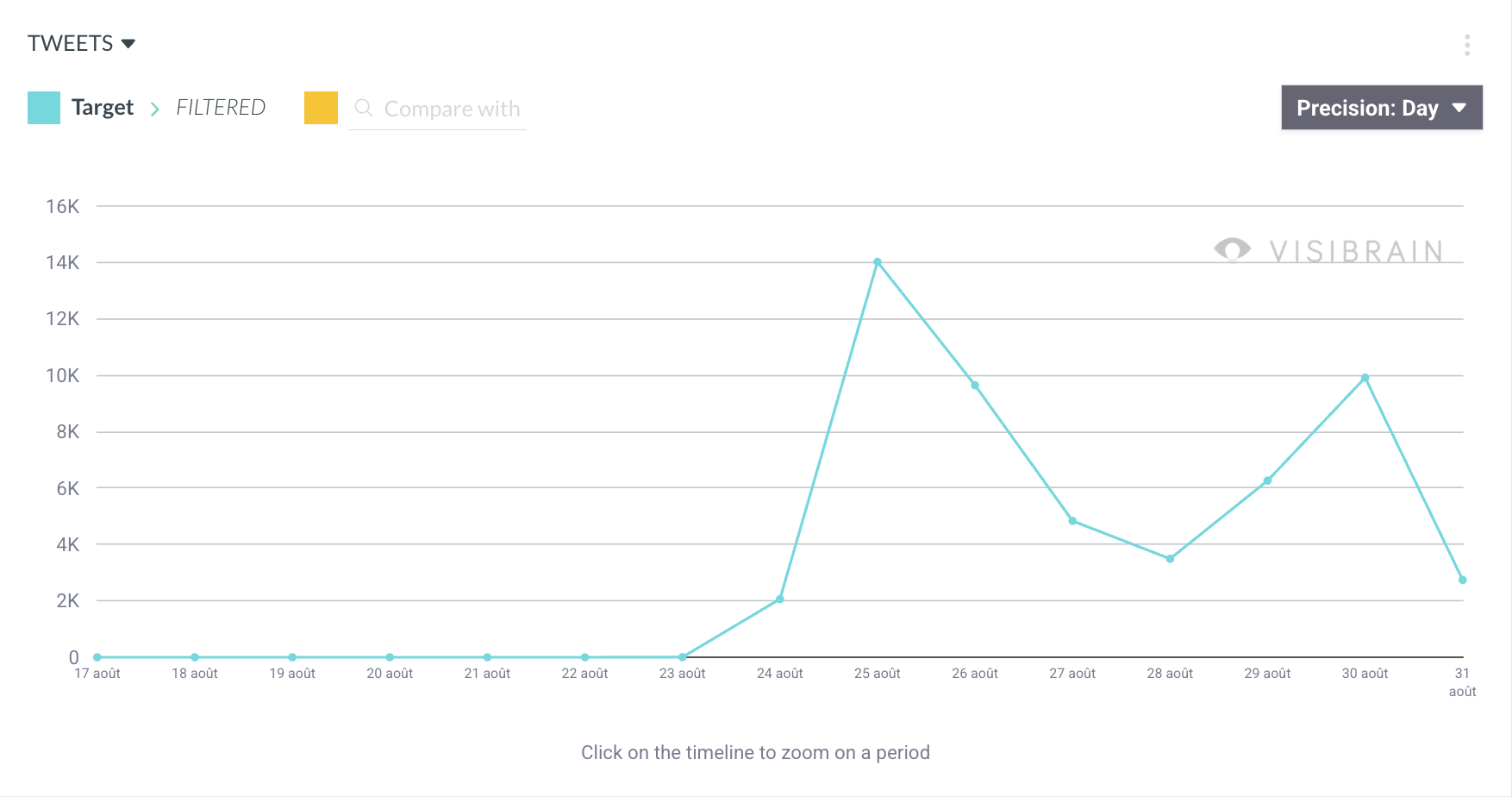
Our analysis identified several distinct clusters of activity, including boycott organising, race-related discussions, anti-DEI commentary, political conversations, pop culture and entertainment, news aggregation, and personal or community-led discussion. While these communities are all connected to the same controversy, the discourse within each of them is strikingly different: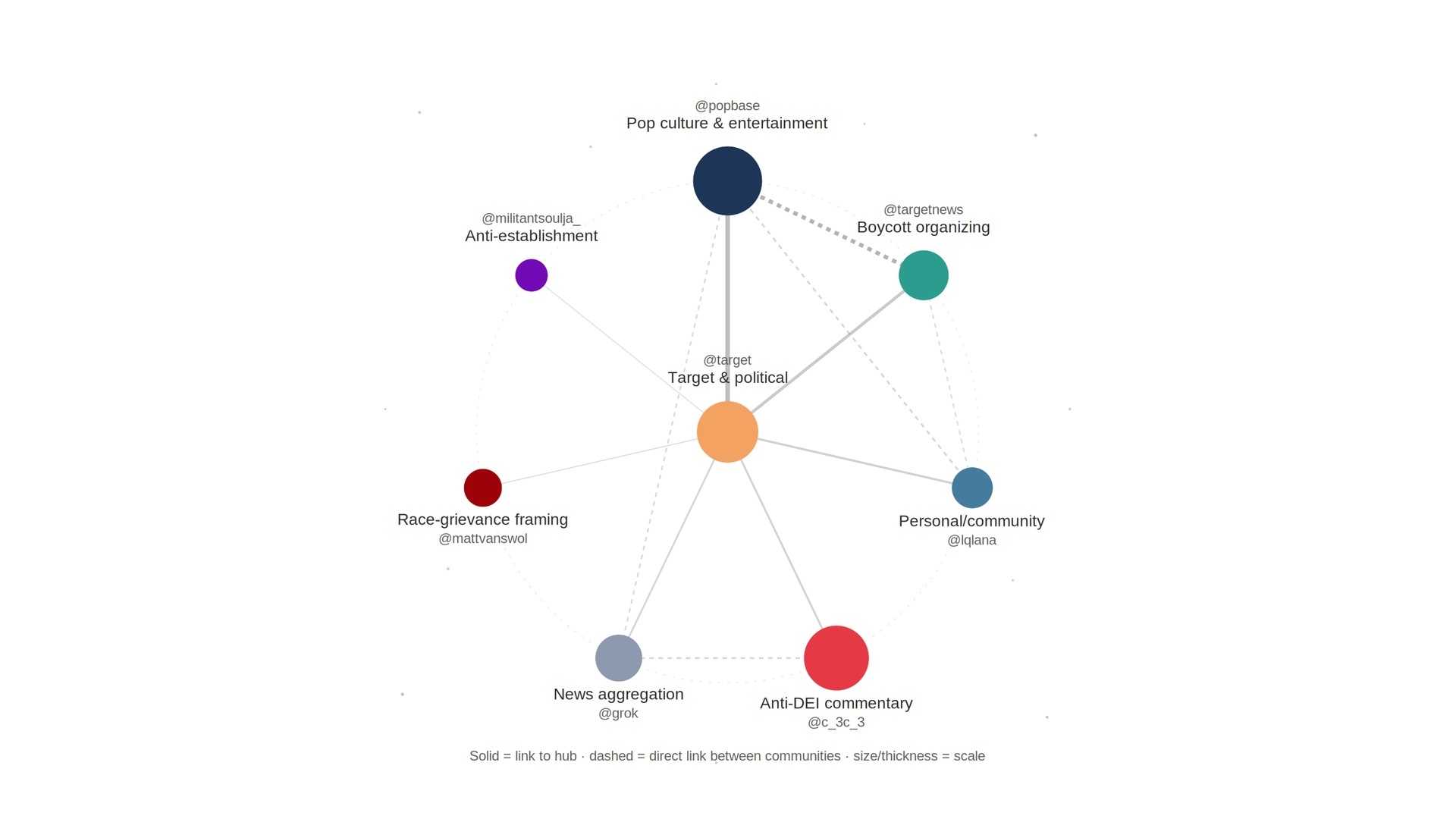

This fragmentation is important for brands to understand. Looking at the conversation as a whole might tell Target that the controversy is generating significant attention and negative sentiment. But it doesn't explain what is driving that attention, which narratives are gaining traction, or how the conversation is moving between different audiences.
It's also important to note that these communities are not operating in isolation. Connections between clusters demonstrate how a conversation can travel beyond its original audience, with cultural, political and consumer narratives intersecting around the same brand.
In other words, one incident can generate multiple conversations at once, each presenting a different reputational challenge for the brand.
The community map shows that Target's latest controversy is being discussed across very different corners of X. Looking at the posts driving engagement makes that divide even clearer.
On one side, users are connecting the controversy to Target's decision to roll back its DEI initiatives, arguing that the Halloween costume is evidence of a wider failure by the company to address racial concerns. On the other, the same controversy is being used to make an entirely different argument, with users criticising Target for refusing to take a position on issues such as immigration and ICE.
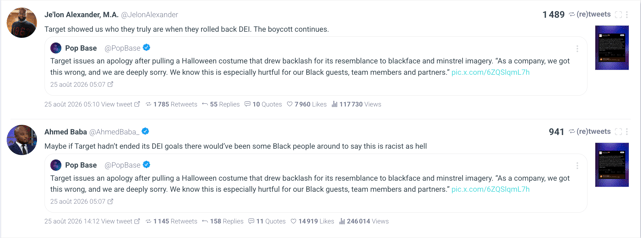
These opposing interpretations are significant because they show how quickly a brand controversy can become a vehicle for pre-existing debates. The original issue becomes evidence for entirely different arguments depending on the community discussing it.
And the debate doesn't stop with DEI or immigration. The screenshots also show the controversy being pulled into discussions around the US education system and teachers' unions, with Target's perceived political positioning becoming part of a much wider ideological debate.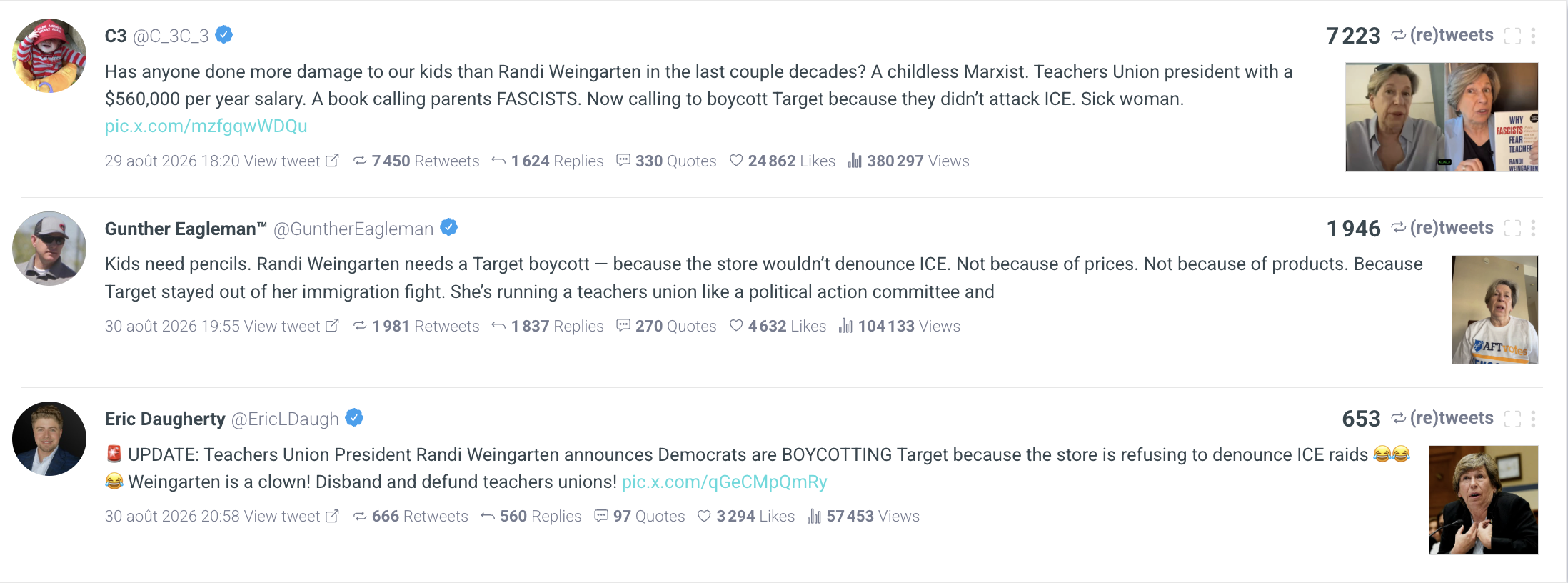
The Target controversy shows how quickly a reputational crisis can move beyond the issue that started it. What began with a Halloween costume has become connected to much broader debates around race, DEI, immigration, education and politics. As these narratives move between communities, the original trigger can become almost secondary to the wider meaning attached to the brand. For communications teams, this is an important distinction: the scale of a crisis isn't only determined by the original incident, but by the conversations it activates around it.
Target responded by removing the costume and issuing an apology, acknowledging:
“As a company, we know we got this wrong, and we are deeply sorry.”
The company also said that removing the costume was “an important first step” and that it was examining what needed to change to prevent a similar incident from happening again.
But a corporate response is only one part of reputation management. As the Target case demonstrates, a crisis doesn't necessarily end when a brand responds, it can continue to evolve across the communities that have already taken ownership of the story. Understanding how audiences react to the response, which narratives continue to gain traction and whether new communities are entering the discussion is therefore just as important as monitoring the initial backlash.
This is where social listening becomes critical. In an increasingly volatile and fragmented online landscape, tracking volume and sentiment alone can tell brands that a crisis is growing, but not necessarily why, where or among whom it is growing. Understanding the communities, narratives and connections behind the data gives communications teams a clearer picture of how a crisis is evolving, and where it could go next.
Newsletter
.png?width=1090&height=1330&name=CTA%20newsletter%20(1).png)